
A photo of Jun Pham, AI Tools Strategist at Aibrainjet

About the Author

Jun Pham

Jun Pham is an AI tools strategist, a video creator and tech writer passionate about the future of AI in editing video. As the face of a dedicated team of creators and researchers, Jamie leads hands-on testing of the latest AI video tools. Together, they share honest reviews, workflow insights, and practical tips to help creators turn ideas into cinematic videos with minimal effort.

Latest Posts

Onepage Website Builder Review: Features, Pros, Cons, and Use Cases

Onepage Website Builder Review: Features, Pros, Cons, and Use Cases
Jun Pham

SendShort AI Review (2025): The Best AI Clipper for Agencies?

Our SendShort AI review tests its white-label features for agencies. Discover how it automates viral shorts, enhances client perception. Try now!
Jun Pham

Zebracat Review (2025): Is This Hybrid AI Ad Generator Worth It?

Our Zebracat review (2025) assesses this hybrid AI video tool for marketers. Is it worth it for generating ads & repurposing content fast? See it now!
Jun Pham

Vizard Review (2025): Is This Hybrid AI Clipper & Editor Better Than OpusClip?

Our expert vizard review reveals if this AI video clipper & editor beats OpusClip for control. Get superior editing & branding for viral shorts. Try now!
Jun Pham

Klap Review (2025): The Best 4K AI Clipper for High-Quality Shorts?

Klap Review (2025): The Best AI Clipper for High-Quality Shorts? Klap Review (2025): The Best 4K AI Clipper for High-Quality Shorts? I have spent ...
Jun Pham

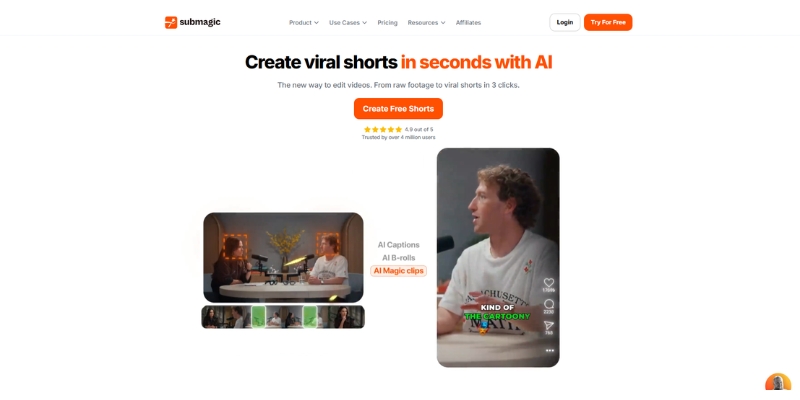
Submagic Review (2025): Is It The Best AI Tool For Hormozi Captions?

This Submagic review (2025) reveals if it's the ultimate AI tool for "Hormozi-style" viral video captions & B-roll. We battle-tested its features, speed, and ROI!
Jun Pham

InVideo Review (2025): Is It The Best AI Video Generator For Marketers?

InVideo Review (2025): Is It The Best AI Video Generator For Marketers?

InVideo Review (2025): Is It The Best AI Video Generator For Marketers?

If you need to create professional videos at scale but lack editing skills, InVideo is the solution you have been searching for. As a Text-to-Video tool designed specifically for marketers, it promises to cut production time by 90%. In this battle-tested review, I will dive deep into InVideo’s capabilities, from its 5,000+ templates to its AI-powered generation built on GPT-4.1. You will learn exactly how its Text-to-Video feature performs in real-world scenarios and whether the pricing plans offer genuine ROI.

Table of Contents

What Is InVideo AI? (And Why Marketers Are Switching To It)

InVideo is a Template-first AI Video Creator that serves as a powerful hybrid solution for modern content production. Unlike basic text-to-video tools that offer zero control, InVideo combines rapid AI automation with a full-featured cloud-based editor.

This distinction matters because most AI generators spit out a final video file you cannot change. InVideo allows you to generate a draft using AI and then tweak every single element using simple text commands through its Magic Box feature.

It is built primarily for Marketers, Freelancers, and Agencies who face tight deadlines. We tested it extensively and found it can turn a blank page into a client-ready video in under 15 minutes, drastically reducing the “time-to-publish” for campaigns.

InVideo dashboard showing AI tools and template library.
InVideo acts as a central hub for both AI generation and manual video editing.

InVideo AI Text-to-Video Feature: A Hands-On Test

I put the core AI Text-to-Video feature to the test to see if it could genuinely replace a junior editor. The goal was to create a 30-second promotional video for a fictional coffee brand using just a simple text script.

Step 1: Input Script
I pasted a 150-word blog excerpt into the editor. The NLP engine built on GPT-4.1 immediately analyzed the text, suggesting relevant images and breaking the script into logical scenes. It felt intuitive, like working with a smart assistant that understands visual storytelling.

Step 2: Select Workflow
I chose the “Script to Video” workflow and selected a “Modern Promo” style from the presets. You can also paste a URL to convert an article directly, which is one of the best text-to-video tools features for repurposing content.

The Generation Speed
The AI generated a complete video with stock footage, text overlays, and background music in approximately 2-3 minutes. This speed is unmatched for “rough cut” production compared to manual editing workflows.

The Output Quality
The AI’s selection of stock footage was surprisingly accurate, matching “morning energy” with high-quality clips from the 8 million+ iStock library. While 2 out of 10 clips needed manual swapping using the Magic Box text editor, the initial draft was 80% ready to publish.

Magic Box Editing
The text-based editing feature is a game-changer. I simply typed “Replace the cat with a snow leopard” and the AI understood and executed the command instantly, eliminating the need to manually search through the media library.

The Asset Library: 5000+ Templates and iStock Integration

The strongest selling point of InVideo is undoubtedly its massive asset library. While competitors often gate their best assets, InVideo provides access to over 5,000 professionally designed templates covering almost every niche imaginable.

During my review, I found specific templates for Real Estate listings, Fitness tutorials, and even “Breaking News” updates. This variety means you rarely have to start from a blank canvas, which helps overcome creative block for agencies working on tight deadlines.

Crucially, InVideo integrates iStock Media directly into the platform, giving you access to over 8 million premium stock photos and videos without needing a separate expensive subscription to Shutterstock or Getty Images. The search function allows you to filter by resolution, style, and content type.

InVideo single prompt to video templates search results.
The library offers niche-specific designs that are ready to use.

InVideo Pricing Plans: Which One Offers the Best ROI?

InVideo offers a tiered pricing structure split into two product lines: InVideo Studio (template-based) and InVideo AI (text-to-video). Understanding which plan provides the best value depends entirely on your output volume and workflow needs.

Plan Price Best For Key Feature Action
Free Plan $0/month Testing 5000+ Templates (Watermarked) Try Free
Studio Business $30/month Small Businesses 60 exports + 10 iStock clips/mo Get Business
Studio Unlimited $60/month Agencies (Templates) Unlimited exports + 120 iStock clips/mo Get Unlimited
AI Plus $25/month AI Creators 50 min AI generation + 80 iStock clips/mo Get AI Plus
AI Max $60/month Agencies (AI-first) 200 min AI generation + 320 iStock clips/mo Get AI Max

Free Plan
This is strictly for testing. It allows you to use the editor and see the templates, but exports will have a watermark. It is useful to verify if the workflow suits you before committing financially.

Studio Business Plan ($30/month)
This is the sweet spot for small businesses and solo creators who prefer template-based editing. You get 60 video exports per month with watermark removal, but you are limited to 10 iStock media clips monthly.

AI Plus Plan ($25/month)
This is ideal for creators who want to leverage AI text-to-video generation. You get 50 minutes of AI generation time, 80 iStock clips, and 2 voice clones, perfect for marketers testing AI workflows.

Studio Unlimited & AI Max Plans ($60/month)
Both plans are designed for agencies and heavy users. Studio Unlimited offers unlimited video exports with 120 iStock clips for template-based work, while AI Max provides 200 minutes of AI generation with 320 iStock clips and 5 voice clones for AI-first workflows.

InVideo vs. Competitors: Pictory and Canva

To help you validate your decision, I compared InVideo directly against its two biggest rivals in the AI video space.

InVideo vs. Pictory
Pictory is the superior choice for long-form content repurposing, such as turning webinars into short clips. However, InVideo is better for creating ads and promotional videos from scratch using templates and AI avatars. InVideo offers superior manual editing control with its timeline and Magic Box text commands, whereas Pictory is more rigid.

InVideo vs. Canva
Canva is primarily a graphic design tool that added video features, while InVideo is a dedicated video editor first with professional-grade AI capabilities. InVideo’s integration with iStock provides a much deeper library of professional video clips compared to Canva’s stock options, which are often overused.

If you want a detailed comparison, read our Pictory vs InVideo guide.

Pros and Cons: The Honest Truth

After weeks of testing, here is the transparent breakdown of what I loved and what could be improved.

✅ Pros

  • Massive Library: Access to 8M+ stock assets and 5000+ templates.
  • Hybrid Workflow: Combines AI generation speed with full manual timeline control and Magic Box text editing.
  • AI Avatars: Create realistic UGC-style ads without hiring actors.
  • Voice Cloning: Clone your voice for consistent branded content across all videos.
  • Support: Their 24/7 Live Support is responsive and helpful for beginners.
  • Value: The inclusion of iStock media saves roughly $30-$50/month in separate subscriptions.

❌ Cons

  • Rendering Time: Exporting complex projects in 1080p can sometimes be slow during peak hours.
  • Mobile Experience: The mobile app is improving but lacks the full power of the desktop version.
  • Learning Curve: It is slightly steeper than Canva because it offers more professional editing features.
  • iStock Quota Limits: Premium asset quotas can run out quickly if you are producing high-volume content.

Final Verdict: Is InVideo Worth the Investment in 2025?

After putting InVideo through its paces, my conclusion is clear. InVideo is currently the Best Overall AI Video Generator for marketers who refuse to sacrifice quality for speed.

My Recommendation: Buy InVideo if you are a marketer, freelancer, or agency owner who needs to produce high-quality ads, promos, and YouTube content cheaply. It effectively replaces the need for a junior video editor while offering AI avatar creation and voice cloning for advanced campaigns.

Avoid It If: You need Hollywood-level VFX (use After Effects) or if you only need very simple photo slideshows (Canva is sufficient).

Start Creating With InVideo for Free

(Disclosure: If you purchase through links on this page, we may earn a small commission at no extra cost to you. This helps us maintain our “battle-tested” reviews.)

Frequently Asked Questions About InVideo

Is InVideo truly free?
Yes, InVideo has a free-forever plan that lets you use all features, but your exported videos will have a watermark. You need to upgrade to a paid plan to remove it.

Can I upload my own media to InVideo?
Absolutely. You can upload your own logos, images, video clips, and audio files to use alongside the stock library assets.

Does InVideo own the rights to my video?
No, you own the full commercial rights to any video you create and export, provided you have a paid subscription for the premium assets used.

What is the difference between InVideo Studio and InVideo AI?
InVideo Studio is template-based editing with manual control. InVideo AI is text-to-video generation powered by GPT-4.1 for rapid content creation from prompts.

Read More From Text-to-Video

If you found this review helpful, explore our other detailed guides on AI video tools to find the perfect stack for your workflow.

last update : 30/11/2025

A photo of Jun Pham, AI Tools Strategist at Aibrainjet

About the Author

Jun Pham

Jun Pham is an AI tools strategist, a video creator and tech writer passionate about the future of AI in editing video. As the face of a dedicated team of creators and researchers, Jamie leads hands-on testing of the latest AI video tools. Together, they share honest reviews, workflow insights, and practical tips to help creators turn ideas into cinematic videos with minimal effort.

Latest Posts

Onepage Website Builder Review: Features, Pros, Cons, and Use Cases

Onepage Website Builder Review: Features, Pros, Cons, and Use Cases
Jun Pham

SendShort AI Review (2025): The Best AI Clipper for Agencies?

Our SendShort AI review tests its white-label features for agencies. Discover how it automates viral shorts, enhances client perception. Try now!
Jun Pham

Zebracat Review (2025): Is This Hybrid AI Ad Generator Worth It?

Our Zebracat review (2025) assesses this hybrid AI video tool for marketers. Is it worth it for generating ads & repurposing content fast? See it now!
Jun Pham

Vizard Review (2025): Is This Hybrid AI Clipper & Editor Better Than OpusClip?

Our expert vizard review reveals if this AI video clipper & editor beats OpusClip for control. Get superior editing & branding for viral shorts. Try now!
Jun Pham

Klap Review (2025): The Best 4K AI Clipper for High-Quality Shorts?

Klap Review (2025): The Best AI Clipper for High-Quality Shorts? Klap Review (2025): The Best 4K AI Clipper for High-Quality Shorts? I have spent ...
Jun Pham

Submagic Review (2025): Is It The Best AI Tool For Hormozi Captions?

This Submagic review (2025) reveals if it's the ultimate AI tool for "Hormozi-style" viral video captions & B-roll. We battle-tested its features, speed, and ROI!
Jun Pham

DomoAI Pricing Explained (2025): Costs, Credits, & Hidden Limits

DomoAI Pricing Explained (2025): Costs, Credits, & Hidden Limits

DomoAI Pricing Explained (2025): Costs, Credits, & Hidden Limits

If you are a creator looking to dive into AI animation, understanding DomoAI pricing is the first step to avoiding budget burnout. Unlike simple flat-fee tools, DomoAI operates on a dynamic credit system that can be confusing for beginners.

I have spent the last six months testing every tier, from the restricted free plan to the high-speed Pro subscription. My goal is to help you navigate the costs of Generative AI without wasting money on credits you don’t need.

In this guide, I will break down the Basic, Standard, and Pro plans, calculate the real “cost per second” of video, and explain why the “Relax Mode” is the secret weapon for savvy marketers.

Table of Contents

What Is DomoAI? (Quick Verdict & Cost Overview)

DomoAI is a specialized AI tool designed for Video-to-Video transformation, allowing creators to turn real footage into anime, cartoons, or 3D animations. It operates primarily via a Credit-Based Subscription model on both Web and Discord platforms.

For most users, the verdict is simple: DomoAI is exceptionally cost-effective if you leverage the “Unlimited Relax Mode” available in higher tiers. This feature sets it apart from competitors that charge for every single second of generation.

The pricing starts at approximately $9.99 per month for the entry-level tier. This is an affordable entry point for hobbyists, but serious creators will quickly outgrow the credit limits of the basic package.

There is a Free Plan available, but it is strictly for testing. It includes watermarks and very limited credits (typically 50-100 one-time credits), which makes it unsuitable for any professional or commercial work.

My “Bottom Line” Verdict: If you plan to make more than 5 videos a month, skip the Basic plan. The Standard Plan is the only option that unlocks the true ROI of DomoAI through unlimited relaxed generation.

Try DomoAI For Free

(Disclosure: If you purchase through links on this page, we may earn a small commission at no extra cost to you. This helps us maintain our “battle-tested” reviews.)

DomoAI Pricing Plans Explained (2025 Updated)

Choosing the right plan depends entirely on your production volume and generation speed requirements. I have analyzed the three main paid tiers—Basic, Standard, and Pro—to show you exactly what you get for your money.

Basic Plan (~$9.99/mo):
This is the starter pack for hobbyists. You get approximately 500 credits per month. It removes the Watermark, but you are stuck with “Fast Mode” only. Once your credits are exhausted, you cannot generate anything else until the next billing cycle.

Standard Plan (~$19.99 – $29.99/mo):
This is the “Best Value” tier for regular creators. It includes approximately 1,000-1,500 monthly credits for urgent Fast Mode tasks. The killer feature here is Unlimited Relax Mode, allowing you to generate infinite videos at slower queue speeds without burning credits.

Pro Plan (~$49.99 – $79.99/mo):
Designed for agencies and power users with high-volume demands. You get a massive 3,000-4,000+ credit allowance and multiple concurrent “Fast Lanes” for parallel processing. Crucially, this plan often unlocks Priority Generation and access to longer video durations.

If you are serious about Commercial Rights, all paid plans cover you. However, the Standard Plan represents the mathematical sweet spot where the cost-per-video drops dramatically due to the unlimited relaxed generation capability.

Plan Price (Monthly) Fast Credits Key Benefit
Basic ~$9.99 500 No Watermark
Standard ~$19.99-$29.99 1,000-1,500 Unlimited Relax Mode
Pro ~$49.99-$79.99 3,000-4,000+ Priority Speed + Multiple Fast Lanes

Note: Exact pricing and credit allocations may vary by region and promotional periods. Always check the official DomoAI website for current rates.

The “Hidden” Currency: How DomoAI Credits Work

To understand the true cost, you must understand the math behind credit consumption. Credits are the fuel for this engine, and video generation burns them at varying rates depending on settings.

Cost Per Generation:
In my extensive testing, credit consumption varies significantly based on video length, resolution, and style complexity. A simple 3-second transformation typically costs approximately 10-20 credits, while a 10-second clip can consume 30-60 credits depending on quality settings.

Fast Mode vs. Relax Mode:
Fast Mode uses your monthly credit allowance to generate videos with priority processing (typically 1-3 minutes). Relax Mode costs zero credits but places you in a slower queue (5-20 minutes depending on server load). This is why the Standard Plan offers superior value.

Math for Marketers:
On the Basic Plan (500 credits), you can generate approximately 8-15 short clips (3-5 seconds each) per month in Fast Mode. For marketers needing 20-30 social media clips monthly, the Standard Plan’s unlimited Relax Mode becomes essential.

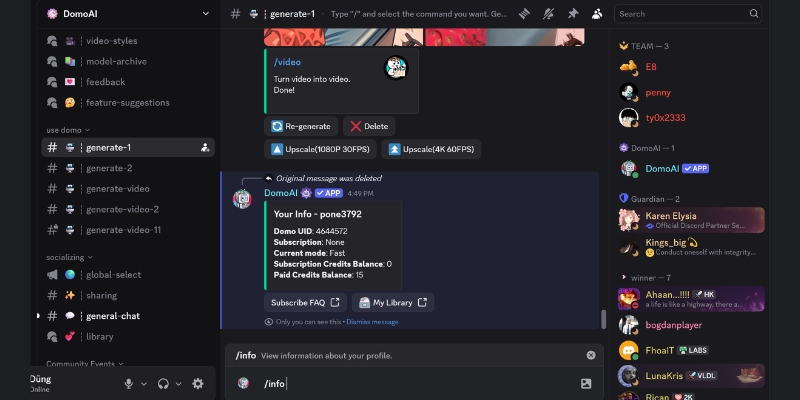
Complex transformations with advanced anime styles or high-resolution outputs may consume more credits per second. Always monitor your balance using the `/info` command in Discord or the credit counter on the web dashboard.

DomoAI Discord interface showing credit balance and subscription details via info command.
You can always check your remaining credits using the /info command in Discord or the web dashboard.

DomoAI Free Plan vs. Paid Plans: Should You Upgrade?

Many users ask if the Free Plan is sufficient for their needs. In 2025, the answer is a definitive “No” for professional content creation. The free tier serves strictly as a demo to test the AI’s capabilities.

The Watermark Issue:
The biggest deal-breaker is the persistent Watermark. Every video generated on the free plan displays a visible DomoAI logo. This makes the content unsuitable for client work, professional social media channels, or any monetized content.

Credit Limitations:
Free users typically receive a small one-time credit allocation (approximately 50-100 credits). This allows you to generate perhaps 3-5 short test clips. Once exhausted, you are locked out of generation until you upgrade to a paid plan.

Slower Generation Queue:
Free users are placed at the lowest priority in the generation queue. During peak usage hours, you might experience significantly longer wait times compared to Priority Generation users on paid plans.

Recommendation:
If you are a student exploring AI capabilities or just curious, the Free Plan works for initial testing. If you are a YouTuber, Marketer, or Freelancer creating content for clients or monetization, you must upgrade to at least the Basic plan for watermark removal and commercial rights.

DomoAI vs. Kaiber & Pika: Pricing Comparison

How does DomoAI stack up against established platforms like Kaiber and Pika Labs? I have compared their pricing models to determine which tool offers the best “Cost-to-Output” ratio for different use cases.

DomoAI vs. Kaiber:
Kaiber excels at “Audio Reactivity” for music videos but operates on a stricter credit system without unlimited relaxed mode. DomoAI wins on volume production thanks to Unlimited Relax Mode. If you need to experiment with 50 style variations for a single project, DomoAI proves more economical.

DomoAI vs. Pika:
Pika Labs specializes in “Text-to-Video” generation and cinematic camera controls. However, DomoAI dominates Video-to-Video stylization (transforming live-action footage into anime). For this specific transformation use case, DomoAI offers superior consistency and better cost efficiency per output.

Platform Accessibility:
Both Kaiber and Pika offer polished web applications from the start. DomoAI originated on Discord but now provides a comprehensive web UI. If you prefer avoiding Discord entirely, Kaiber might feel more premium, though you pay a premium price for that streamlined interface.

The Verdict:
Choose DomoAI if your primary workflow involves stylization transformations and high-volume production. Choose Kaiber if you need precise camera movements synchronized to music beats. Choose Pika if you prioritize photorealistic text-to-video generation.

How to Subscribe & Manage Your Subscription

Subscribing to DomoAI is straightforward, but proper account linking is crucial. You can subscribe via the DomoAI Web App or directly inside Discord using the `/subscribe` command.

Syncing Accounts:
Crucially, your subscription is tied to your Discord ID. Ensure you are logged into the correct Discord account before completing payment. This ensures your credits and subscription benefits appear consistently across the mobile app, desktop Discord, and web interface.

Canceling or Upgrading:
You can manage your plan through the “Settings” or “Subscription” tab on your web profile. To Cancel Subscription, you typically need to access the payment provider portal (usually Stripe) linked in your account settings.

Accepted Payment Methods:
DomoAI generally accepts major credit cards (Visa, Mastercard, American Express) and sometimes regional payment methods depending on your location. Be aware that most plans default to Auto-Renewal unless you manually disable it.

Important Warning:
If you cancel, you usually retain your credits and access until the end of the current billing cycle. However, verify the policy on “rollover credits,” as most AI subscription services do not preserve unused credits if you unsubscribe and later resubscribe.

Frequently Asked Questions About DomoAI Cost

Can I roll over unused credits?
Typically, no. DomoAI operates on a monthly reset cycle. If you have 200 Fast Mode credits remaining at the end of your billing period, they usually expire. The strategy is to use them before renewal or rely on Relax Mode for non-urgent projects.

Is the payment monthly or yearly?
You can choose either billing cycle. The Annual Plan usually offers approximately 15-20% savings compared to monthly billing. If you are committed to long-term content creation, the annual Standard tier provides the best financial value.

Does DomoAI offer refunds?
Standard digital goods policies apply. Generally, if you have consumed credits or generated content, refunds are not available. If you accidentally renewed and haven’t used any credits, you might have a case with customer support, but this is not guaranteed.

Is there an Enterprise plan?
Yes, for studios requiring significantly more than Pro plan limits (10,000+ credits monthly), you can contact DomoAI support for custom enterprise pricing. This is uncommon for individual creators but necessary for production houses or agencies with massive output demands.

How do I remove the watermark?
The only method to remove the watermark is subscribing to a Paid Plan (Basic, Standard, or Pro). There is no “pay-per-video” option to remove watermarks on free tier generations—it requires an active subscription.

Read More From AI Generative Video

Explore more guides and comparisons to build your perfect AI video production toolkit and maximize your creative ROI.

last update : 29/11/2025

A photo of Jun Pham, AI Tools Strategist at Aibrainjet

About the Author

Jun Pham

Jun Pham is an AI tools strategist, a video creator and tech writer passionate about the future of AI in editing video. As the face of a dedicated team of creators and researchers, Jamie leads hands-on testing of the latest AI video tools. Together, they share honest reviews, workflow insights, and practical tips to help creators turn ideas into cinematic videos with minimal effort.

Latest Posts

Onepage Website Builder Review: Features, Pros, Cons, and Use Cases

Onepage Website Builder Review: Features, Pros, Cons, and Use Cases
Jun Pham

SendShort AI Review (2025): The Best AI Clipper for Agencies?

Our SendShort AI review tests its white-label features for agencies. Discover how it automates viral shorts, enhances client perception. Try now!
Jun Pham

Zebracat Review (2025): Is This Hybrid AI Ad Generator Worth It?

Our Zebracat review (2025) assesses this hybrid AI video tool for marketers. Is it worth it for generating ads & repurposing content fast? See it now!
Jun Pham

Vizard Review (2025): Is This Hybrid AI Clipper & Editor Better Than OpusClip?

Our expert vizard review reveals if this AI video clipper & editor beats OpusClip for control. Get superior editing & branding for viral shorts. Try now!
Jun Pham

Klap Review (2025): The Best 4K AI Clipper for High-Quality Shorts?

Klap Review (2025): The Best AI Clipper for High-Quality Shorts? Klap Review (2025): The Best 4K AI Clipper for High-Quality Shorts? I have spent ...
Jun Pham

Submagic Review (2025): Is It The Best AI Tool For Hormozi Captions?

This Submagic review (2025) reveals if it's the ultimate AI tool for "Hormozi-style" viral video captions & B-roll. We battle-tested its features, speed, and ROI!
Jun Pham

How to Use DomoAI: The Complete Discord Tutorial for Creators (2025)

How to Use DomoAI: The Complete Discord Tutorial for Creators (2025)

How to Use DomoAI: The Complete Discord Tutorial for Creators (2025)

Mastering how to use domoai is currently the fastest workflow to transform static images into viral anime-style videos. As creators, we constantly seek tools that balance speed with aesthetic quality.

In this guide, I will break down the specific Discord commands and settings you need to master. We move beyond basic prompts to explore the AI Generative Video workflows that professionals use.

Whether you are a marketer animating a logo or a freelancer creating content, this tutorial covers everything from the /animate command to advanced pricing strategies. Let’s dive into the details.

Table of Contents

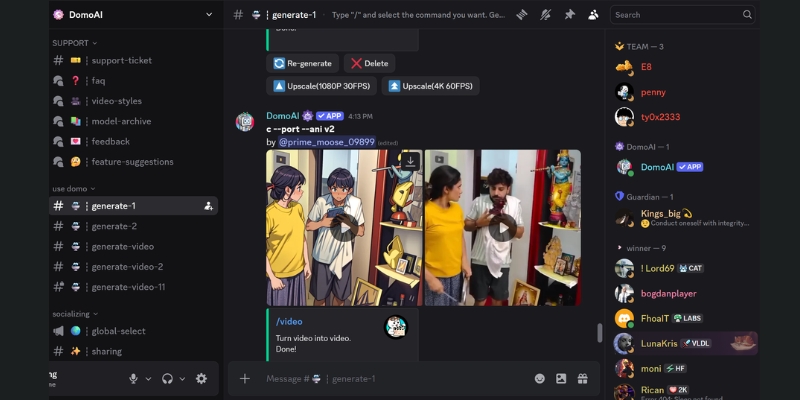
DomoAI Discord interface showing image-to-video anime transformation.
DomoAI operates entirely within Discord, turning images into video via slash commands.

What Is DomoAI & How Does It Transform Video Creation?

DomoAI is a specialized AI video generator hosted on Discord that focuses on high-quality stylization. It primarily converts static images and text prompts into fluid animations, excelling in Anime and 3D cartoon aesthetics.

Marketers often struggle with the time-intensive process of traditional animation. DomoAI solves this pain point by automating the “motion” layer, allowing you to produce 3-5 seconds of high-frame-rate video in under two minutes.

The tool’s core entity is its Image-to-Video feature. Unlike generalist tools that hallucinate wild details, DomoAI maintains the structural integrity of your source image while applying a consistent “Real-to-Anime” filter.

I have tested dozens of generative tools, and DomoAI operates exclusively via Discord. This platform-based approach allows for community learning but can be a barrier if you are unfamiliar with server navigation.

After using this tool for several campaigns, I found it stands out for its style consistency. If you need a reliable AI Video Generator for social media content, this is a top-tier contender.

Getting Started: How to Join and Navigate the DomoAI Discord

The Discord interface can feel chaotic to non-gamers, but don’t let that stop you. The workflow is actually linear once you know where to click. Here is the streamlined process to get access.

Join the Server
Navigate to the official DomoAI website and click “Join our Discord”. You must have a verified Discord account. Accept the invite to enter their server environment.

Locate the Workspace
On the left sidebar, scroll down to find the “GENERATE VIDEO” section. You will see channels like generate-video, generate-1, or generate-2. Click any of these. Do not type commands in the “general” chat.

Understanding the UI
DomoAI relies on “slash commands”. This means you initiate every action by typing a forward slash (/) in the message bar. A menu will pop up showing available tools like /animate or /video.

How to Use DomoAI Image-to-Video (The /animate Command)

This is the most popular feature for marketers. It takes an existing image—like a product shot or a selfie—and adds movement. Here is the battle-tested workflow for the best results.

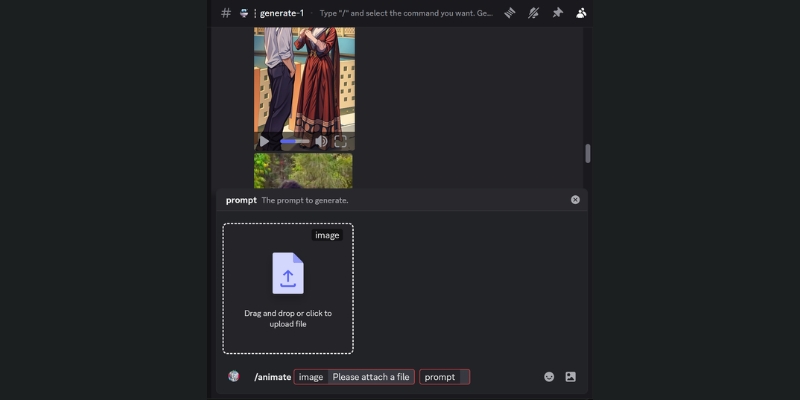
Typing the /animate command in DomoAI Discord channel .
The /animate command is the gateway to turning static photos into dynamic videos.

Step 1: Type the Command
Go to a “generate” channel. Click the message bar, type /animate, and press Enter. A specific box will appear requesting an “image” and a “prompt”.

Step 2: Upload Your Image
Click the “image” field and select your file (JPG or PNG). I recommend high-resolution images for the best clarity. This image serves as the visual anchor for the video.

Step 3: Enter the Prompt
The prompt here guides the *motion*, not the content. Type simple instructions like “A man blinking and smiling” or “Wind blowing through hair”. Keep it short and focused.

Step 4: Configure Settings (Crucial)
After hitting Enter, a settings menu pops up. Select your Motion Intensity (Low for portraits, High for action). Choose your Duration (3s, 5s, or 10s) and Aspect Ratio (9:16 for Reels, 16:9 for YouTube).

Step 5: Generate
Click “Start”. The bot will take 1-3 minutes to render depending on server load. Since the chat moves fast, check the “Mentions” tab (the @ symbol) in Discord to find your finished video quickly.

How to Use DomoAI Text-to-Video (The /video Command)

Use the Text-to-Video feature when you do not have a source image. The AI creates the visual and the motion purely from your text description and imagination.

The Command
Type /video in the message bar and hit Enter. This opens the prompt input field specifically for generation from scratch without a reference image.

Prompt Engineering
Since there is no reference image, your prompt must be highly descriptive. Include details about lighting, camera angle, and character appearance (e.g., “Cinematic shot of a cybernetic samurai walking through neon rain, dramatic lighting, 4k anime style”).

Style Selection
A dropdown menu will allow you to pick the visual style. Options usually include Anime, Realism, or 3D Cartoon. Selecting the right style is critical for the final “look and feel” matching your creative vision.

Comparison
Be aware that Text-to-Video offers less control over specific character features than Image-to-Video. It is great for abstract concepts and exploratory work but less reliable for consistent branding across multiple videos.

Mastering DomoAI Prompts & Parameters for Better Results

To move from “average” to “professional” output, you need to master prompt engineering parameters. Small tweaks in your text can drastically change the quality of the anime style transformation.

Style Keywords
Add specific semantic keywords to trigger distinct looks. Use terms like “Ghibli style” for soft, painterly visuals, “Cyberpunk” for neon edges and high contrast, or “Watercolor” for artistic, fluid flair.

Negative Prompts
Use the –no parameter to exclude unwanted elements. For example, adding “–no blur, –no distortion, –no extra fingers, –no watermark” cleans up the final video significantly and prevents common AI artifacts.

Consistency Tips
To keep a character looking the same across multiple generations, always use the same base “seed” or reference image. Describe the character’s clothing and distinctive features clearly in every prompt (e.g., “red jacket, blue eyes, scar on left cheek”).

Example Prompts
Try this structure: “[Subject] doing [Action], [Environment], [Style], [Lighting]”. Example: “A magical cat creating glowing spells with its paws, enchanted forest background, Studio Ghibli anime style, soft volumetric lighting, golden hour”.

For more advanced techniques on controlling video output quality, check our comprehensive guide on prompt engineering for AI video.

DomoAI Pricing & Plans: Is It Worth the Investment?

DomoAI operates on a credit-based subscription model. Understanding the ROI is vital for freelancers and agencies deciding whether to upgrade from the free trial for professional work.

Free Trial
New users receive a small amount of one-time credits (typically around 50-100) upon joining. This is enough for roughly 3-5 short generations to test the capabilities and interface before financial commitment.

Subscription Plans
Paid plans reset credits monthly. The Basic Plan usually starts around $9.99/month, offering approximately 500 credits. The Standard Plan (~$19.99) provides around 1,000 credits, while the Pro Plan offers 3,000+ credits with faster generation speeds.

Commercial Rights
This is critical: you generally own the commercial rights to videos created only while you maintain an active paid subscription. Verify this in their latest Terms of Service if you plan to sell or license the content to clients.

Private Mode
Pro users often get access to “Stealth mode” or private generation channels. This allows you to generate videos in a private bot chat, keeping your client work and creative experiments hidden from the public server—essential for agencies.

Plan Credits / Month Ideal For Action
Basic ~500 Credits Hobbyists & Beginners Check Price
Standard ~1,000 Credits Content Creators Get Started
Pro ~3,000 Credits Agencies & Power Users Go Pro

Verdict
If you are a casual user creating occasional content, stick to the Basic plan. However, for serious DomoAI usage involving client work or high-volume production, the Private Mode and increased credits in the Pro plan are mandatory for professional workflows.

Try DomoAI for Free

(Disclosure: If you purchase through links on this page, we may earn a small commission at no extra cost to you. This helps us maintain our “battle-tested” reviews.)

Frequently Asked Questions About Using DomoAI

Is DomoAI free to use?
It offers free starting credits (typically 50-100) for new accounts, but it is not permanently free. Once you deplete your initial credits, you must subscribe to a monthly plan to continue generating videos.

Can I use DomoAI without Discord?
Currently, DomoAI is primarily Discord-based. While they may develop a standalone web application in the future, the full feature set and community support currently reside entirely within the Discord ecosystem.

How do I delete my video from the server?
You can usually delete your generation by reacting to the bot’s message with the “X” emoji (if available) or by right-clicking the message and selecting “Delete Message”. Note that this only removes it from public view—the bot may retain data server-side.

Why is my generation failing?
Failures often occur due to overly sensitive “NSFW” content filters triggering falsely, server overload during peak hours, or problematic prompt keywords. Try simplifying your prompt, removing potentially sensitive keywords, or waiting a few minutes before retrying.

Read More From AI Generative Video

Expand your knowledge with our latest comparisons and tutorials in the AI video space. These guides are designed to help you choose the right tool for your specific creative workflow.

last update : 29/11/2025

A photo of Jun Pham, AI Tools Strategist at Aibrainjet

About the Author

Jun Pham

Jun Pham is an AI tools strategist, a video creator and tech writer passionate about the future of AI in editing video. As the face of a dedicated team of creators and researchers, Jamie leads hands-on testing of the latest AI video tools. Together, they share honest reviews, workflow insights, and practical tips to help creators turn ideas into cinematic videos with minimal effort.

Latest Posts

Onepage Website Builder Review: Features, Pros, Cons, and Use Cases

Onepage Website Builder Review: Features, Pros, Cons, and Use Cases
Jun Pham

SendShort AI Review (2025): The Best AI Clipper for Agencies?

Our SendShort AI review tests its white-label features for agencies. Discover how it automates viral shorts, enhances client perception. Try now!
Jun Pham

Zebracat Review (2025): Is This Hybrid AI Ad Generator Worth It?

Our Zebracat review (2025) assesses this hybrid AI video tool for marketers. Is it worth it for generating ads & repurposing content fast? See it now!
Jun Pham

Vizard Review (2025): Is This Hybrid AI Clipper & Editor Better Than OpusClip?

Our expert vizard review reveals if this AI video clipper & editor beats OpusClip for control. Get superior editing & branding for viral shorts. Try now!
Jun Pham

Klap Review (2025): The Best 4K AI Clipper for High-Quality Shorts?

Klap Review (2025): The Best AI Clipper for High-Quality Shorts? Klap Review (2025): The Best 4K AI Clipper for High-Quality Shorts? I have spent ...
Jun Pham

Submagic Review (2025): Is It The Best AI Tool For Hormozi Captions?

This Submagic review (2025) reveals if it's the ultimate AI tool for "Hormozi-style" viral video captions & B-roll. We battle-tested its features, speed, and ROI!
Jun Pham

Kaiber Pricing 2025: Plans, Credit Costs & Hidden Fees Explained

Kaiber Pricing 2025: Plans, Credit Costs & Hidden Fees Explained

Kaiber Pricing 2025: Plans, Credit Costs & Hidden Fees Explained

If you are a creator investigating Kaiber pricing, you are likely trying to determine whether the subscription justifies the creative capabilities—especially after the major Superstudio platform launch in late 2024.

I have spent hundreds of dollars testing various AI Generative Video tools, and Kaiber’s credit system has undergone significant changes that fundamentally reshape its value proposition.

Unlike flat-fee tools, Kaiber now operates through Superstudio—an infinite canvas platform integrating multiple AI models—with a flexible credit model where costs vary based on the specific AI engine, resolution, and generation length you choose.

In this guide, I will break down the Flex, Creator, and Pro plans, analyze the real cost per second of video across different AI models, and help you decide which tier maximizes your creative ROI.

Table of Contents

Kaiber Superstudio Pricing at a Glance: The New Value Equation

Kaiber fundamentally restructured its pricing in late 2024 with the launch of Superstudio—shifting from a simple generation tool to a comprehensive creative platform integrating Luma, Veo, Kling, Runway, and other best-in-class AI models.

The platform now operates on a flexible pay-as-you-go model alongside subscription tiers. This means your actual costs depend heavily on which AI models you choose and at what resolution you render.

Here is the current pricing structure for November 2025:

Plan Name Monthly Cost Credits / Month Cost Per Credit Best For
Flex $0 (Pay-as-you-go) Buy as needed Variable Single projects / Testing
Creator $29 / mo 1,400 ~$0.021 Active Creators (Best Value)
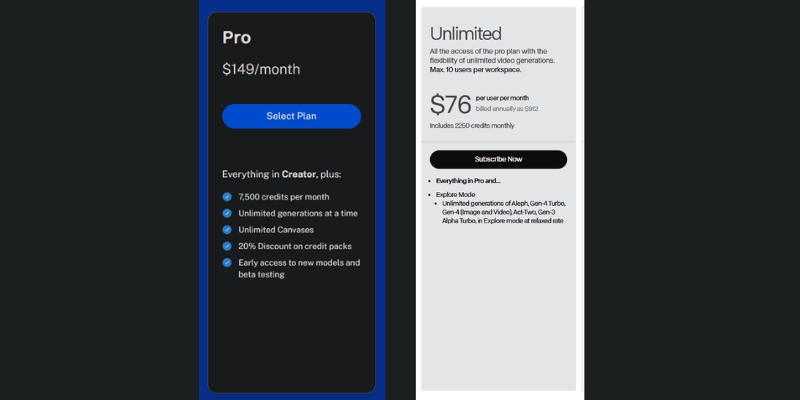
Pro $149 / mo 7,500 ~$0.020 Studios / Power Users

The Creator Plan at $29/month represents the sweet spot for most professional content creators. It provides substantial monthly credits while unlocking commercial rights and watermark-free exports.

The Flex Plan (pay-as-you-go) is ideal for occasional users or those testing the platform, though per-credit costs are higher without a subscription. Credit packs typically start at $5 for 300 credits.

Deep Dive into Kaiber Superstudio Plans: Flex vs. Creator vs. Pro

Choosing the right plan requires understanding both your production volume and which AI models you will primarily use. I will analyze each tier to reveal the true value proposition.

Flex Plan ($0/mo): The On-Demand Option

This plan eliminates recurring charges—you only purchase credits when needed. Credit packs start at approximately $5 for 300 credits, scaling up for bulk purchases.

The major limitation is per-credit cost—you pay a premium compared to subscription plans. Additionally, Flex users may not receive priority processing during peak demand periods.

This works well for users creating one-off projects or testing Kaiber’s capabilities before committing to a subscription. However, frequent users quickly find subscriptions more economical.

Creator Plan ($29/mo): The Professional Standard

This is the plan I recommend for serious content creators. With 1,400 monthly credits, you have substantial capacity for multiple music videos, social media content, or audio-reactive visualizations.

Crucially, the Creator Plan grants full commercial rights to all generated content—non-negotiable for freelancers and agencies delivering client work. You also receive watermark-free exports and priority access to new AI models as they integrate into Superstudio.

For musicians creating Spotify Canvas loops or TikTok content, this tier provides the perfect balance of volume and cost-effectiveness. In my testing, 1,400 credits generates approximately 2-4 complete music videos at standard quality settings.

Pro Plan ($149/mo): The Studio Powerhouse

Targeted at production studios and agencies with high-volume demands, this tier provides a massive 7,500 monthly credits. The per-credit cost drops to its lowest level across all plans.

This plan is essential if you are producing multiple client projects simultaneously or generating extensive footage for long-form content. You receive highest-priority processing queues, ensuring faster render times even during platform congestion.

The Pro tier also typically receives earliest access to beta features and experimental AI models before they roll out to lower tiers—valuable for staying ahead of creative trends.

How the Kaiber Superstudio Credit System Actually Works

Understanding credit consumption is critical for accurate budgeting. Unlike the old Kaiber system, Superstudio credits vary significantly based on which AI model you select and your output quality settings.

Here is the approximate credit consumption breakdown based on my extensive testing:

  • Kaiber Native Models (Stylized): Approximately 1 credit per second for standard 1080p generation.
  • Luma Dream Machine Integration: Approximately 1.5-2 credits per second for photorealistic outputs.
  • Runway Gen-3 Integration: Approximately 2-3 credits per second for high-fidelity cinematic generation.
  • 4K Upscaling: Additional 50-100 credits per video depending on length and complexity.
  • Audio-Reactive Processing: Adds approximately 20-30% to base generation costs due to beat analysis overhead.

Do credits roll over?

Yes, on Creator and Pro plans, unused credits roll over month-to-month with no hard expiration. However, there is typically a maximum accumulation cap (usually 2-3x your monthly allowance) to prevent indefinite hoarding.

This rollover policy dramatically improves value—you don’t lose investment during slower creative months. Flex plan credits purchased separately typically have 12-month validity.

Be strategic: complex audio-reactive videos with multiple model integrations consume credits rapidly. Budget approximately 30% more credits than base calculations for iteration and experimentation.

Chart showing Kaiber Superstudio credit consumption rates by AI model.
Premium AI models like Runway consume 2-3x more credits than Kaiber’s native stylized generation engines.

Kaiber Free Trial Explained: Limits and Getting Started

Kaiber’s free tier has evolved significantly with Superstudio. Rather than a traditional “free plan,” they now offer limited trial credits to test the platform before financial commitment.

Trial Credit Allocation

New users typically receive a small allocation of trial credits (approximately 100-150) to explore the interface and test basic generation capabilities across different AI models.

The Watermark Reality

All videos generated on trial credits include visible Kaiber branding watermarks. This makes outputs unsuitable for professional client deliverables or clean social media posts requiring brand consistency.

Feature Access Restrictions

Trial users cannot access 4K upscaling, extended video durations (typically capped at 30 seconds), or commercial licensing rights. You also lack access to premium integrated AI models like Runway Gen-3.

If you are seriously evaluating Kaiber, I recommend the Flex plan approach—purchase a single $5 credit pack to test the full platform capabilities without watermarks before committing to a monthly subscription.

Key Features Behind the Paywall: What Makes Kaiber Worth Paying For

Why invest in Kaiber when free AI tools exist? The answer lies in specialized capabilities unavailable elsewhere—particularly for musicians and visual artists.

Audio-Reactive Synchronization

This remains Kaiber’s signature feature. Paid plans allow you to upload audio tracks, and the AI analyzes beat structure, rhythm, and frequency ranges to pulse visuals in perfect sync.

For musicians creating Spotify Canvas loops or full music videos, this feature alone justifies subscription costs. It automates hours of manual keyframe animation work that would otherwise require professional motion designers.

Multi-Model Integration via Superstudio

Unlike single-model platforms, Superstudio lets you combine outputs from Luma (realism), Kling (stylized animation), and Runway (cinematic quality) on a single infinite canvas—streamlining complex creative workflows.

Commercial Rights Ownership

Trial and Flex users face licensing restrictions. Creator and Pro subscribers receive full commercial copyright to all generated content—essential for agencies, freelancers, and musicians monetizing their work.

This legal safety net is non-negotiable for professional use. Delivering client work with unclear licensing is a liability risk no agency should accept.

Kaiber Cost vs. Competitors: Value Analysis for 2025

How does Kaiber’s Superstudio pricing compare to alternatives in the AI video generation space? Let’s analyze ROI across different use cases.

Kaiber vs. Pika Labs

Pika’s Pro plan at $35/month offers 2,300 credits—comparable to Kaiber’s Creator plan credit allocation. However, Pika specializes in photorealistic motion, while Kaiber excels at stylized, audio-reactive content. For music visualizers, Kaiber offers better value.

Kaiber vs. DomoAI

DomoAI dominates anime-style video transformation. If your sole focus is anime aesthetics, DomoAI may offer better per-minute costs. But Kaiber’s style diversity and audio-sync capabilities provide broader creative flexibility.

Kaiber vs. Runway Gen-3 Direct

Runway’s Pro plan at $28/month offers 2,250 credits but costs significantly more per second of generation. Kaiber’s Superstudio integration lets you access Runway’s models at potentially lower effective costs through credit optimization strategies.

Value Verdict

For realistic cinematic footage, Runway or Luma direct subscriptions may offer better value. For artistic, stylized, and music-synchronized content, Kaiber’s Creator plan provides unmatched cost-per-creative-impact ratio.

Which Plan Should You Choose? Strategic Recommendations by Use Case

To help you decide quickly, here are my recommendations based on specific creative workflows and production demands.

For Musicians & Independent Artists

Go with the Creator Plan. The 1,400 monthly credits support 2-4 complete music videos, and audio-reactive synchronization is the platform’s killer feature for this audience. Commercial rights are essential for Spotify and YouTube monetization.

For Social Media Marketers

The Creator Plan is ideal. It generates dozens of 6-15 second vertical loops for TikTok/Reels—exactly what social strategies demand. The style diversity helps prevent creative fatigue across campaigns.

For Hobbyists & Learners

Start with the Flex Plan. Purchase small credit packs ($5-10) monthly to experiment without recurring charges. Upgrade to Creator once your output frequency justifies subscription economics.

For Production Studios & Agencies

The Pro Plan is non-negotiable. High-volume client work demands the credit capacity, priority processing, and commercial licensing this tier provides. The cost is easily absorbed into client project budgets.

Final Verdict: Is Kaiber Superstudio Worth It?

Yes, especially at the Creator tier ($29/mo). The audio-reactive synchronization alone justifies costs for musicians, and Superstudio’s multi-model integration provides workflow efficiency unavailable elsewhere at this price point.

If you are ready to start creating, current offers are available below:

Get Started with Kaiber Superstudio

(Disclosure: If you purchase through links on this page, we may earn a small commission at no extra cost to you. This helps us maintain our “battle-tested” reviews.)

Frequently Asked Questions About Kaiber Costs

Can I cancel my subscription anytime?

Yes, Kaiber allows cancellation at any time with no penalties. Your credits remain valid through the end of your current billing cycle, and unused rollover credits typically remain accessible for 30 days post-cancellation.

Does Kaiber offer annual billing discounts?

Yes, annual subscriptions typically offer 15-20% savings compared to month-to-month billing. This is ideal for established creators with consistent production schedules who can commit long-term.

How do I buy more credits without upgrading plans?

Both Creator and Pro subscribers can purchase “Top-Up” credit packs as one-time purchases when monthly allocations run low. These typically start at $10 for 600 credits with volume discounts on larger packs.

Is there a student or educational discount?

Educational pricing policies vary. Contact Kaiber support directly with valid student credentials (.edu email) to inquire about current academic discount availability—these are offered periodically but not guaranteed.

What happens if I run out of credits mid-generation?

Generation will fail to initiate if insufficient credits exist. You will receive a notification prompting credit purchase or plan upgrade before proceeding. In-progress generations always complete—credits are only deducted upon successful job submission.

Read More From AI Generative Video

If you found this pricing analysis helpful, explore our other battle-tested guides on AI video platforms:

last update : 29/11/2025

A photo of Jun Pham, AI Tools Strategist at Aibrainjet

About the Author

Jun Pham

Jun Pham is an AI tools strategist, a video creator and tech writer passionate about the future of AI in editing video. As the face of a dedicated team of creators and researchers, Jamie leads hands-on testing of the latest AI video tools. Together, they share honest reviews, workflow insights, and practical tips to help creators turn ideas into cinematic videos with minimal effort.

Latest Posts

Onepage Website Builder Review: Features, Pros, Cons, and Use Cases

Onepage Website Builder Review: Features, Pros, Cons, and Use Cases
Jun Pham

SendShort AI Review (2025): The Best AI Clipper for Agencies?

Our SendShort AI review tests its white-label features for agencies. Discover how it automates viral shorts, enhances client perception. Try now!
Jun Pham

Zebracat Review (2025): Is This Hybrid AI Ad Generator Worth It?

Our Zebracat review (2025) assesses this hybrid AI video tool for marketers. Is it worth it for generating ads & repurposing content fast? See it now!
Jun Pham

Vizard Review (2025): Is This Hybrid AI Clipper & Editor Better Than OpusClip?

Our expert vizard review reveals if this AI video clipper & editor beats OpusClip for control. Get superior editing & branding for viral shorts. Try now!
Jun Pham

Klap Review (2025): The Best 4K AI Clipper for High-Quality Shorts?

Klap Review (2025): The Best AI Clipper for High-Quality Shorts? Klap Review (2025): The Best 4K AI Clipper for High-Quality Shorts? I have spent ...
Jun Pham

Submagic Review (2025): Is It The Best AI Tool For Hormozi Captions?

This Submagic review (2025) reveals if it's the ultimate AI tool for "Hormozi-style" viral video captions & B-roll. We battle-tested its features, speed, and ROI!
Jun Pham

Pika vs Kaiber (2025 Comparison): Realism or Rhythm?

Pika vs Kaiber: Which AI Video Generator Wins? (2025 Comparison)

Pika vs Kaiber: Which AI Video Generator Wins? (2025 Comparison)

If you are trying to decide between Pika vs Kaiber, you are standing at the crossroads of two very different creative philosophies in the AI Generative Video space.

I have spent countless credits and hours testing these platforms since their beta days.

For creators, understanding the distinction between “Realism” and “Artistic Flair” is crucial to avoiding wasted budget.

While Pika 2.2 has become the industry standard for high-fidelity, cinematic motion, Kaiber remains the undisputed champion for stylized, audio-reactive music videos.

In this battle-tested review, we will dissect the pricing, features, and specific use cases to help you decide which tool fits your creative workflow.

Table of Contents

Pika vs Kaiber: The Quick Verdict (Realism vs. Art)

Let’s cut straight to the chase.

The main difference lies in the visual output and the intended end-user.

We found that Pika focuses on generating video that looks like it was shot with a camera.

Kaiber, on the other hand, focuses on video that looks like it was painted or animated by an artist.

Feature Pika (2.2/2.5) Kaiber
Core Strength Realistic Cinematic Video Stylized & Abstract Animation
Best For Filmmakers, Marketing Ads Musicians, Music Videos
Key Feature Scene Ingredients & Pikaframes Audio Reactivity (Beat Sync)
Video Length Up to 10 seconds (25s with Pikaframes) Full-length music videos (minutes)
Style 3D Animation, Photorealism Anime, Oil Painting, Claymation

🚀 Expert Verdict

Choose Pika if: You need realistic characters or cinematic scenes with precise camera control.

The Scene Ingredients feature allows you to upload custom elements like characters, objects, and backgrounds.

Choose Kaiber if: You are a musician needing a full-length video that pulses to the beat of your song.

Kaiber excels at unique “frame-by-frame” anime aesthetics and abstract art styles.


Try Pika For Free Try Kaiber For Free

(Disclosure: If you purchase through links on this page, we may earn a small commission at no extra cost to you. This helps us maintain our “battle-tested” reviews.)

Visual Style Comparison: Cinematic AI vs. Stylized Animation

When comparing Pika vs Kaiber, the visual output is the biggest differentiator.

I have run the same prompts through both, and the results are worlds apart.

Pika’s Realism:
Pika 2.2 excels at physics and lighting.

When I prompt for “a cyberpunk city,” Pika generates reflections on wet pavement that look physically accurate.

It aims for a “shot on film” look.

The movement in Pika is smooth and consistent.

Characters maintain their identity reasonably well, making it suitable for narrative storytelling where continuity matters.

Kaiber’s Artistic Flair:
Kaiber embraces the “AI hallucination” as a feature, not a bug.

Its “Flipbook” and “Motion” styles create a flickering, dream-like aesthetic that is perfect for lo-fi beats or intense rock tracks.

In my tests, Kaiber struggled with photorealism.

If you ask for a “real person,” it often looks like a high-quality painting or a stylized rotoscope animation rather than a video clip.

Side by side comparison of Pika realism versus Kaiber artistic style
Pika (Left) aims for photorealism, while Kaiber (Right) excels at stylized art.

Feature Battle: Scene Ingredients vs. Audio Reactivity

Beyond the visuals, the unique features of each tool dictate their workflow.

This is where the transactional decision is usually made.

Pika’s Scene Ingredients (Pika 2.0):
This is the game-changer that sets Pika apart.

You can upload individual elements like characters, objects, clothing, or environments, and Pika’s AI combines them into a cohesive scene.

Advanced image recognition ensures these elements are seamlessly integrated.

Pika’s Pikaframes (Pika 2.2):
This feature allows you to upload the first and last frame as still images.

Pika then generates a video that transitions between them, creating motion that defies expectations.

Generations can be up to 25 seconds with Pikaframes.

Pika’s Modify Region (Pikaswaps):
This “In-painting” feature allows you to select a shirt, a pair of sunglasses, or a background element.

You can change only that part while keeping the rest of the video stable.

Kaiber’s Audio Reactivity:
Kaiber is the king of music visualization.

You can upload a song, and the AI analyzes the stems (drums, bass, melody).

You can set the video to “zoom” on the bass kick or “brighten” on the snare.

Kaiber’s Transform (Video-to-Video):
While Pika can do this, Kaiber specializes in total transformation.

You can upload a video of yourself dancing in your room and turn it into a claymation robot dancing on Mars.

Workflow & Ease of Use: From Discord to Web

Both tools started with Discord roots, but they have evolved into full-fledged web applications.

User experience (UX) is critical for daily workflows.

Pika’s Interface:
Pika successfully migrated from Discord to a sleek web interface.

I found the “text-to-video” prompt box intuitive.

The addition of camera controls (Pan, Tilt, Zoom) gives you director-level control without complex syntax.

Kaiber’s Interface:
Kaiber uses a “Storyboard” approach.

It guides you step-by-step: Upload Media → Select Style → Settings.

It feels more like a creative wizard than a technical dashboard.

Render Time:
Pika is generally faster for short clips.

With Pika 2.2, you can generate videos from 1 to 10 seconds.

Kaiber allows for much longer generations (up to minutes if you have the credits), but the rendering time can be significant for long music videos.

Pricing & ROI: Which Offers Better Value?

For freelancers and agencies, cost-per-second is a vital metric.

Both platforms operate on a credit-based model, but they burn credits differently.

Plan Level Pika Pricing Kaiber Pricing
Free Tier 150 credits/month (Basic)
Watermarked
50 welcome credits (Flex)
Watermarked
Standard/Creator $10/month (700 credits)
All models, no commercial use
$29/month (1,400 credits)
Unlimited Beat Sync
Pro $35/month (2,300 credits)
Commercial use, no watermark
$149/month (7,500 credits)
Unlimited canvases
Premium $95/month (6,000 credits, Fancy)
Fastest generations
Custom (Enterprise)
Unlimited credits
Value Verdict Check Pika Check Kaiber

Credit System:
Pika burns credits based on model and duration.

For example, Pika 2.2 costs 6-60 credits depending on length and resolution.

Kaiber is similar but can burn credits faster if you use complex “audioreactivity” settings or high frame-rate upscaling.

Recommendation:
If you are a hobbyist experimenting with AI art, Kaiber’s Creator plan offers good value.

However, for professional video production requiring high fidelity and commercial rights, Pika’s Pro plan ($35/month) offers better ROI due to the usability of the footage.

Final Recommendation: Who Wins for Your Needs?

After testing Pika vs Kaiber extensively, I can confidently say there is no single “winner”—only the right tool for the job.

Choose Pika If:
You are a filmmaker, marketer, or content creator who needs realistic stock footage.

If you need precise camera movements or want to upload custom scene elements (Scene Ingredients), Pika is your only real choice here.

The Pikaframes feature is perfect for creating transitions between two key moments.

Choose Kaiber If:
You are a musician, VJ, or artist.

If your goal is to create a full-length music video that visualizes sound, Kaiber is superior.

If you want a specific artistic style (Anime, Impressionism) without realism constraints, Kaiber excels in this domain.

The Combo Strategy:
For the ultimate workflow, we often use Pika to generate a realistic base video.

Then we run it through Kaiber to add a stylized, audio-reactive layer on top.

Ready to Create?

Start your journey with the tool that fits your vision.

Get Realistic Results with Pika
Get Artistic Styles with Kaiber

Frequently Asked Questions About Pika and Kaiber

Is Pika better than Kaiber for music videos?
Generally, no.

Kaiber is designed specifically for music videos with its audio-reactivity features.

Pika is better for narrative scenes within a music video.

Can I use Pika for free?
Yes, Pika offers a free Basic plan with 150 credits per month.

The videos will have a watermark and cannot be used for commercial purposes.

Does Kaiber have lip sync?
No, Kaiber focuses on stylistic animation and video-to-video transformation.

It does not currently offer lip-synchronization for talking heads.

Which is better for AI anime generation?
Kaiber is generally stronger for consistent anime styles.

It offers specific style templates tailored for 2D animation and frame-by-frame aesthetics.

What is Pika’s Scene Ingredients feature?
Scene Ingredients (introduced in Pika 2.0) allows you to upload multiple elements like characters, objects, and environments.

Pika’s AI then combines them into a single cohesive video scene with seamless integration.

How long can Pika videos be?
Pika 2.2 supports up to 10 seconds for standard generations.

With Pikaframes, you can generate videos up to 25 seconds long.

Read More From AI Generative Video

Explore more reviews and comparisons to find the perfect tools for your creative stack.

last update : 29/11/2025

A photo of Jun Pham, AI Tools Strategist at Aibrainjet

About the Author

Jun Pham

Jun Pham is an AI tools strategist, a video creator and tech writer passionate about the future of AI in editing video. As the face of a dedicated team of creators and researchers, Jamie leads hands-on testing of the latest AI video tools. Together, they share honest reviews, workflow insights, and practical tips to help creators turn ideas into cinematic videos with minimal effort.

Latest Posts

Onepage Website Builder Review: Features, Pros, Cons, and Use Cases

Onepage Website Builder Review: Features, Pros, Cons, and Use Cases
Jun Pham

SendShort AI Review (2025): The Best AI Clipper for Agencies?

Our SendShort AI review tests its white-label features for agencies. Discover how it automates viral shorts, enhances client perception. Try now!
Jun Pham

Zebracat Review (2025): Is This Hybrid AI Ad Generator Worth It?

Our Zebracat review (2025) assesses this hybrid AI video tool for marketers. Is it worth it for generating ads & repurposing content fast? See it now!
Jun Pham

Vizard Review (2025): Is This Hybrid AI Clipper & Editor Better Than OpusClip?

Our expert vizard review reveals if this AI video clipper & editor beats OpusClip for control. Get superior editing & branding for viral shorts. Try now!
Jun Pham

Klap Review (2025): The Best 4K AI Clipper for High-Quality Shorts?

Klap Review (2025): The Best AI Clipper for High-Quality Shorts? Klap Review (2025): The Best 4K AI Clipper for High-Quality Shorts? I have spent ...
Jun Pham

Submagic Review (2025): Is It The Best AI Tool For Hormozi Captions?

This Submagic review (2025) reveals if it's the ultimate AI tool for "Hormozi-style" viral video captions & B-roll. We battle-tested its features, speed, and ROI!
Jun Pham

Pika vs Luma Dream Machine (2025 Review): Which AI Video Generator Wins?

Pika vs Luma Dream Machine (2025): Which AI Video Generator Wins?

Pika vs Luma Dream Machine (2025): Which AI Video Generator Wins on Realism?

The battle of Pika vs Luma Dream Machine is effectively the current championship match for high-end AI video generation.

As content creators and marketers face increasing pressure to produce high-fidelity visuals without Hollywood budgets, these two tools have emerged as the leading AI Generative Video solutions.

While both platforms promise text-to-video magic, they serve fundamentally different creative intents. Pika has carved a niche in stylized animation and marketing speed, while Luma Labs aims for world model physics and cinematic photorealism.

In this expert comparison, I will break down the Realism, Lip Sync Features, Speed, and ROI of both tools based on rigorous testing.

Whether you are a filmmaker or a social media manager, you will know exactly which tool deserves your budget by the end of this guide.

Table of Contents

Head-to-Head Snapshot: Pika vs. Luma Dream Machine at a Glance

Both tools are leaders in the generative video comparison landscape, but they cater to distinct audiences.

I have tested both extensively to give you this immediate snapshot, saving you from wasting credits on the wrong tool.

Feature Pika (Pika Art) Luma Dream Machine
Best For Creative shorts, Marketing, Anime Cinematic Realism, VFX, B-Roll
Key Feature Lip Sync & Pikaframes Physics & Modify with Instructions
Video Length 10 seconds (1080p) 10 seconds (extendable to 30s)
Speed Fast iterations Slower (Draft Mode available)
Platform Web & Mobile Web Interface
Link Try Pika Free Try Luma Free
The Short Answer:
If you need anime-style visuals, Lip Sync capabilities for speaking characters, and fast iterations for social media, choose Pika. If you require photorealistic physics, high-fidelity textures, and coherent cinematic camera moves for video production, choose Luma Dream Machine.

Realism & Video Quality: Which Tool Creates Better Footage?

In the Luma Dream Machine review context, realism is the primary metric.

Marketers need footage that passes the uncanny valley test to maintain audience trust. Here is how they compare visually.

Texture and Detail:
Luma Dream Machine with its Ray3 model is currently superior in rendering hyper-realistic textures.

In my tests, it handled complex surfaces like human skin pores, flowing water, and fabric reflections with startling accuracy.

Pika 2.5, while introducing enhanced physics and ultra-realistic generations, often smooths over these details, resulting in a more digital art look.

Motion and Physics:
This is Luma’s stronghold. It utilizes a world model that understands gravity and collision.

Characters walk with weight, and objects interact logically. Pika’s motion can sometimes feel floaty, where characters glide rather than step.

Scene Consistency:
Luma excels at temporal coherence, meaning the background doesn’t hallucinate or shift wildly as the camera moves.

Pika struggles here slightly; you might notice a building in the background changing shape over a ten-second clip, which breaks immersion.

Prompt Adherence Test: How Well Do They Listen?

A powerful AI video generator must follow instructions. To test this NLP capability, I fed both tools complex prompts involving specific actions and lighting conditions.

Pika’s Performance:
In our tests, we noticed Pika 2.5 is fantastic at capturing vibes and artistic styles.

If you ask for a cyberpunk city in neon pink, it nails the aesthetic immediately.

However, it sometimes ignores specific action commands if they conflict with its animation logic.

Luma’s Performance:
Luma is more literal. It attempts to render complex interactions described in the prompt, such as a car crashing into a wall.

It respects the physics of the prompt better, even if the aesthetic isn’t as instantly stylized as Pika’s.

Key Features Breakdown: Lip Sync, Motion Controls, and Editing

Beyond raw video quality, the feature set determines your workflow.

This is where the specific commercial intent of the user becomes the deciding factor between the two platforms.

Pika’s Killer Feature: Lip Sync & Pikaframes:
Pika is currently the king of character animation because of its native Lip Sync feature.

You can upload audio, and the character’s mouth moves perfectly. Combined with AI Sound Effects generation, Pika is a complete storytelling suite for creators.

The new Pikaframes feature lets you upload first and last frames of a scene, and Pika generates seamless transitions from one to ten seconds.

Luma’s Strength: Modify with Instructions & Camera Control:
Luma introduced Modify with Instructions in August 2025, allowing natural language editing across VFX, advertising, and film workflows.

You can remove objects, swap characters, or change virtual sets without mask painting.

It also offers granular control over camera motion. You can dictate a specific zoom, pan, or tilt, mimicking a real director’s hand.

Luma also allows for keyframes and annotations, letting you extend videos seamlessly with subject-aware edits, which is crucial for filmmakers.

Editing Capabilities (Modify Region vs. Inpainting):
Pika shines here with Modify Region. You can select a character’s shirt and prompt change to red jacket, and it updates just that area.

This saves hours of post-production editing that would otherwise require complex masking.

Speed & User Experience: Workflow Efficiency Analyzed

For freelancers facing performance pressure, time is money. The render time can be a dealbreaker when you need to generate dozens of clips for a client.

Generation Speed:
Pika is generally faster. A standard ten-second clip in 1080p usually renders quickly, often under two minutes.

Luma Dream Machine, due to its complex physics calculations and high demand, often suffers from longer queues.

However, Luma now offers Draft Mode to accelerate iterations for quick subject edits and product snippets.

Platform Accessibility (Web vs. Mobile):
Both have moved to dedicated web UIs, leaving the chaotic Discord interface behind.

Pika’s dashboard feels more social and gamified, while Luma’s interface is stark, professional, and utilitarian.

Pika also offers mobile app support for iOS, making it more accessible for on-the-go creators.

Usability for Beginners:
I found Pika to be more forgiving. Its prompting system requires less prompt engineering to get a good result.

Luma demands more descriptive prompts to truly unlock its photorealistic potential.

Pricing & Free Plans: Which Offers Better ROI?

Understanding the cost per generation is vital. Both operate on a credit-based system, but the value proposition differs significantly depending on your usage volume.

Free Plan Limitations:
Pika offers a free tier with 80 credits per month. Luma does not currently offer a free plan without watermarks, but provides trial credits.

Both free tiers are strictly for non-commercial use, and videos will have watermarks.

Pika Pricing (2025):
Free Plan: 80 monthly credits, access to Pika 1.5 and Turbo, watermarked downloads, no commercial use.

Standard ($10/month): 700 monthly credits, access to all models (1.0, 1.5, 2.1, 2.2, Turbo, Pro), faster generations, watermarked downloads, no commercial use.

Pro ($35/month): 2,300 monthly credits, all models, fastest generations, watermark-free downloads, commercial use allowed, can purchase rollover credits.

Fancy ($95/month): 6,000 monthly credits, all models, fastest generations, watermark-free downloads, commercial use allowed, can purchase rollover credits.

Check out our detailed Pika Pricing Explained guide for a breakdown.

Luma Pricing (2025):
Web Lite ($9.99/month): 3,200 monthly credits, full Ray3 access, 4K with up-res, high priority processing, non-commercial use only, watermarked.

Web Plus ($29.99/month): 10,000 monthly credits, full Ray3 access, 4K with up-res and HDR, high priority processing, commercial use allowed, no watermarks.

Web Unlimited ($94.99/month): 10,000 monthly credits for Fast Mode plus unlimited credits in Relaxed Mode, full Ray3 access, 4K with up-res and HDR, high priority processing, commercial use allowed, no watermarks.

Commercial License:
Critically, you only own the commercial rights to your videos on the paid plans for both tools.

If you are a freelancer selling services, staying on the free plan is legally risky.

Final Verdict: Should You Choose Pika or Luma Dream Machine?

After testing hundreds of prompts across both platforms, the decision comes down to your specific role in the creative industry.

There is no single best tool, only the right tool for the job.

Choose Pika If:
You are a social media content creator making TikToks or Reels.

You need characters to speak using Lip Sync, you prefer anime or 3D animation styles, and you need a fast turnaround time without waiting in long queues.

The Pikaframes feature also makes Pika ideal for creators who want precise control over transitions.

Choose Luma Dream Machine If:
You are a filmmaker or video editor needing high-end B-roll.

You prioritize physics and realism over generation speed, and you need precise camera movements to match a storyboard.

The Modify with Instructions feature makes Luma perfect for VFX and advertising workflows where object removal and virtual set changes are crucial.

The Sora Context:
Both of these tools are currently the most accessible alternatives to OpenAI’s Sora.

While we wait for widespread access to Sora, Luma and Pika are the battle-tested engines driving the industry forward.

Try Luma Dream Machine Try Pika Art

(Disclosure: If you purchase through links on this page, we may earn a small commission at no extra cost to you. This helps us maintain our battle-tested reviews.)

Frequently Asked Questions About Pika vs. Luma

Which AI video generator is more realistic?
Luma Dream Machine with Ray3 currently holds the edge in photorealism, particularly regarding lighting, texture, and real-world physics.

Can Pika do lip syncing?
Yes, Pika excels at lip sync. You can upload audio tracks, and it will animate the character’s mouth to match the dialogue perfectly.

Is Luma Dream Machine free?
Luma does not offer a completely free plan. The Web Lite plan costs nine dollars ninety-nine cents per month and includes watermarks with non-commercial use only.

How do I remove the watermark?
To remove the watermark on Pika, you must upgrade to the Pro plan (thirty-five dollars per month) or higher. For Luma, you need the Web Plus plan (twenty-nine dollars ninety-nine cents per month) or higher.

Which is better for realistic video, Pika or Luma?
For realistic textures and physics, choose Luma. For stylized or animated realism with character performance, Pika is often the better choice.

What is the maximum video length for Pika and Luma?
Both Pika and Luma support ten-second video generations. Luma allows extending videos up to approximately thirty seconds, though quality may degrade.

Read More From AI Generative Video

Expand your knowledge with our latest deep dives into the world of AI video generation tools.

last update : 29/11/2025

A photo of Jun Pham, AI Tools Strategist at Aibrainjet

About the Author

Jun Pham

Jun Pham is an AI tools strategist, a video creator and tech writer passionate about the future of AI in editing video. As the face of a dedicated team of creators and researchers, Jamie leads hands-on testing of the latest AI video tools. Together, they share honest reviews, workflow insights, and practical tips to help creators turn ideas into cinematic videos with minimal effort.

Latest Posts

Onepage Website Builder Review: Features, Pros, Cons, and Use Cases

Onepage Website Builder Review: Features, Pros, Cons, and Use Cases
Jun Pham

SendShort AI Review (2025): The Best AI Clipper for Agencies?

Our SendShort AI review tests its white-label features for agencies. Discover how it automates viral shorts, enhances client perception. Try now!
Jun Pham

Zebracat Review (2025): Is This Hybrid AI Ad Generator Worth It?

Our Zebracat review (2025) assesses this hybrid AI video tool for marketers. Is it worth it for generating ads & repurposing content fast? See it now!
Jun Pham

Vizard Review (2025): Is This Hybrid AI Clipper & Editor Better Than OpusClip?

Our expert vizard review reveals if this AI video clipper & editor beats OpusClip for control. Get superior editing & branding for viral shorts. Try now!
Jun Pham

Klap Review (2025): The Best 4K AI Clipper for High-Quality Shorts?

Klap Review (2025): The Best AI Clipper for High-Quality Shorts? Klap Review (2025): The Best 4K AI Clipper for High-Quality Shorts? I have spent ...
Jun Pham

Submagic Review (2025): Is It The Best AI Tool For Hormozi Captions?

This Submagic review (2025) reveals if it's the ultimate AI tool for "Hormozi-style" viral video captions & B-roll. We battle-tested its features, speed, and ROI!
Jun Pham

Visla Review (2025): The #1 AI Video Tool for Internal Comms?

Visla Review (2025): The #1 AI Video Tool for Internal Comms?

Visla Review (2025): The #1 AI Video Tool for Internal Comms?

If you are managing a remote team or handling corporate training, Visla is likely on your radar. While most tools focus on viral social media clips, Visla has quietly positioned itself as the Swiss Army Knife for business video communication. I have tested dozens of Text-to-video tools tools, from Lumen5 to Synthesia, but Visla offers something different with its revolutionary text-based editing and 100+ AI avatars. In this battle-tested review, I will dissect whether Visla is truly the best tool for Team Collaboration and screen recording, analyzing pricing, features, and real-world ROI for businesses.

Table of Contents

What Is Visla AI & How Does It Work for Business?

Visla is an all-in-one AI video creation platform designed specifically for business teams, shifting focus from “viral content” to effective corporate communication with multi-modal inputs including text, scripts, URLs, audio, video, PDF, and PowerPoint presentations.

At its core, Visla acts as your Text-to-Video assistant with NLP that automatically selects relevant stock footage from premium libraries including Storyblocks (4M videos) and Getty Images (16M videos for Business/Enterprise plans). Unlike standard editors, Visla excels at Screen Recording with built-in teleprompter and Screen Step Recording that creates dynamic step-by-step guides with AI annotations.

Text-Based Editing (Game-Changer):
Instead of scrubbing through a timeline, you edit the video by editing the transcript. If you delete a sentence in the text, Visla cuts that section from the video automatically. The enhanced Auto Cut feature with “Bad Takes” removal intelligently identifies and removes poorly delivered lines or repeated takes.

Visla text-based video editing interface showing transcript deletion .
Visla allows you to edit videos like a Google Doc by deleting text from the transcript.

Revolutionary Features: AI Avatars, Voice Cloning & Getty Access

Visla moves beyond simple stock footage compilation by adding robust recording and collaboration tools. Here are the specific features that make it a powerhouse for Team Collaboration in 2025.

100+ Public AI Avatars (All Plans):
Choose from a diverse set of photorealistic characters available to all users, including Free plan. Great for creating professional, camera-free videos without uploading a photo or recording voice. Custom avatars: Pro (2), Business (3), Enterprise (unlimited).

Instant Voice Cloning:
Clone your own voice for natural, personalized voiceovers in multiple languages. Pro plans get 3 custom voices, while Business/Enterprise enjoy unlimited voice cloning. Perfect for branded content and consistent narration across global teams.

Getty Images Premium Access (16M+ Videos):
Business and Enterprise tiers unlock Getty Images with 16 million+ premium videos in addition to Storyblocks’ 4 million assets. This massive 20M+ total stock library ensures you find the perfect B-roll for any corporate message.

Screen Step Recording with GIF Creation:
Capture every action on your screen and create dynamic step-by-step guides with AI annotations, text overlays, narration, and background music. Convert recorded steps into shareable GIFs perfect for tutorials and customer support content.

Video Maker GPT Integration:
For users embedded in the OpenAI ecosystem, Visla offers a GPT in the GPT Store enabling automated video creation workflows. Scan trending news, generate scripts with GPT-5, feed to Visla API, and auto-post to social channels.

Visla Pricing 2025: Credit-Based System Explained

Visla operates on a usage-based credit system with significantly updated pricing for 2025. Here is how the Pricing Plans break down with transparent credit allocation.

Plan Price Base Credits Export Quality Best For
Free $0 5,000/month 1080p Testing (50 min publish)
Pro $9/month* 20,000/month 1080p Creators (~16-17 min text videos)
Business $39/month* Custom 4K Teams/HR (Getty + 3 custom avatars)
Enterprise Custom Custom 4K Large orgs (unlimited avatars/voices)

*Billed annually. Monthly pricing available at higher rates.

Try Visla for Free

(Disclosure: If you purchase through links on this page, we may earn a small commission at no extra cost to you.)

Credit System Breakdown:
Text-based projects (Idea/Script to Video): ~1 credit/second (~60 credits/minute). Voice-based projects: ~1.5 credits/second (~90 credits/minute). Visual-based projects: ~3 credits/second (~150-200 credits/minute). Avatar videos: ~5 credits/second of lip-sync animation used.

Pro Plan ($9/month – BEST VALUE):
With 20,000 base credits monthly, create approximately 16-17 minutes of text-based videos or 11 minutes of voice-based projects. Includes 4M Storyblocks library, 2 custom avatars, 3 voice clones, and 1080p export. Flexible credits available at 150 credits/$1.

Business Plan ($39/month – FOR TEAMS):
Unlocks 4K export, Getty Images (16M+ premium videos), 3 custom avatars, unlimited voice clones, Private Stock AI auto-labeling, and comprehensive admin controls. Flexible credits at 100 credits/$1 provide better value for heavy usage.

Visla vs. Lumen5: Which Tool Suits Your Needs?

Primary Focus:
Lumen5 is a “Blog-to-Video” tool for external marketing snippets. Visla is a “Record-and-Edit” platform for Business Communication with robust collaboration features including timestamped comments and secure enterprise sharing.

Editing Capabilities:
Visla is superior for working with original footage through text-based editing of recordings. Lumen5 relies on a timeline editor better suited for arranging stock assets and text overlays from blog content.

AI Features:
Visla offers 100+ AI avatars, custom avatar creation, voice cloning, and Video Maker GPT integration. Lumen5 focuses on keyword-to-footage matching without avatar or voice cloning capabilities, making Visla more comprehensive for corporate video needs.

Pros and Cons: Transparent Evaluation

✅ Pros

  • All-in-One Workflow: Combines recording, AI editing, and hosting in one dashboard.
  • Text-Based Editing: Revolutionary approach saves hours of timeline scrubbing.
  • 100+ AI Avatars: Accessible on all plans including Free for camera-free videos.
  • Voice Cloning: Instant personal voice creation in multiple languages.
  • Getty Images Access: 20M+ total stock library (Business/Enterprise).
  • Bad Takes Removal: AI auto-identifies and removes flubbed lines.

❌ Cons

  • Credit System Complexity: Usage-based pricing requires monitoring to avoid overages.
  • Learning Curve: Feature-rich interface more complex than simple drag-and-drop makers.
  • Avatar Quality Variance: Some public avatars less natural than custom-created ones.
  • Stock Match Accuracy: AI sometimes picks generic footage requiring manual swaps.

Final Verdict: Should Your Team Invest in Visla?

Expert Recommendation: Visla is a comprehensive communication platform ideal for Internal Comms, HR, L&D managers, and marketing teams producing consistent branded updates. At $9/month (Pro) or $39/month (Business), it replaces Loom, Zoom clips, and basic editors for 90% of business tasks.

Who Should Buy: Remote teams needing professional video communication, corporate trainers creating scalable learning materials, and marketers requiring 100+ AI avatars with voice cloning for personalized content at scale.

Who Should Skip: Influencers seeking highly stylized “trendy” editing with meme inserts. Visla is built for professionals valuing clarity and speed over flashiness. Consider CapCut or OpusClip for social-first content.

Final Rating: 4.5/5 for Business Utility.

Frequently Asked Questions About Visla

Is Visla completely free to use?
Visla has a Free plan with 5,000 credits monthly (approximately 50 minutes of video publishing). It includes watermarks and basic features but allows unlimited recordings for testing the platform.

How many custom avatars can I create?
Pro plans get 2 custom avatars, Business gets 3, and Enterprise enjoys unlimited custom avatars. All plans access 100+ public avatars at no extra cost.

Does Visla support voice cloning?
Yes. Pro plans get 3 custom voice clones (2,000 credits one-time per voice), while Business and Enterprise have unlimited voice cloning for personalized multilingual narration.

What’s the difference between Storyblocks and Getty Images?
Storyblocks (4M videos) is available on Pro, Business, and Enterprise. Getty Images (16M premium videos) is exclusive to Business/Enterprise, totaling 20M+ stock assets for maximum creative flexibility.

Can I use Visla for screen recording?
Absolutely. Visla includes comprehensive screen recording with teleprompter, Screen Step Recording for dynamic guides, GIF creation, annotation tools, and auto-zooming—making it superior to Loom for polished training content.

Read More From Text-to Video

Expand your knowledge on AI video tools with detailed comparisons tailored for business professionals.

last update : 29/11/2025

A photo of Jun Pham, AI Tools Strategist at Aibrainjet

About the Author

Jun Pham

Jun Pham is an AI tools strategist, a video creator and tech writer passionate about the future of AI in editing video. As the face of a dedicated team of creators and researchers, Jamie leads hands-on testing of the latest AI video tools. Together, they share honest reviews, workflow insights, and practical tips to help creators turn ideas into cinematic videos with minimal effort.

Latest Posts

Onepage Website Builder Review: Features, Pros, Cons, and Use Cases

Onepage Website Builder Review: Features, Pros, Cons, and Use Cases
Jun Pham

SendShort AI Review (2025): The Best AI Clipper for Agencies?

Our SendShort AI review tests its white-label features for agencies. Discover how it automates viral shorts, enhances client perception. Try now!
Jun Pham

Zebracat Review (2025): Is This Hybrid AI Ad Generator Worth It?

Our Zebracat review (2025) assesses this hybrid AI video tool for marketers. Is it worth it for generating ads & repurposing content fast? See it now!
Jun Pham

Vizard Review (2025): Is This Hybrid AI Clipper & Editor Better Than OpusClip?

Our expert vizard review reveals if this AI video clipper & editor beats OpusClip for control. Get superior editing & branding for viral shorts. Try now!
Jun Pham

Klap Review (2025): The Best 4K AI Clipper for High-Quality Shorts?

Klap Review (2025): The Best AI Clipper for High-Quality Shorts? Klap Review (2025): The Best 4K AI Clipper for High-Quality Shorts? I have spent ...
Jun Pham

Submagic Review (2025): Is It The Best AI Tool For Hormozi Captions?

This Submagic review (2025) reveals if it's the ultimate AI tool for "Hormozi-style" viral video captions & B-roll. We battle-tested its features, speed, and ROI!
Jun Pham

Wave.video Review (2025): Is This All-in-One Platform Worth It?

Wave.video Review (2025): Is This All-in-One Platform Worth It?

Wave.video Review (2025): Is This All-in-One Platform Worth It?

If you have been looking for an honest, battle-tested wave.video review, you have landed in the right place. In the crowded world of AI video tools, finding a platform that actually simplifies your workflow is rare. I know the struggle: you are paying for Zoom to record, Premiere Pro to edit, and Vimeo to host. It is expensive and fragmented. As part of our Text-to Video analysis, I spent weeks testing Wave.video’s claims about being a true all-in-one solution. In this guide, we will dissect its Video Editor, Hosting, and Live Streaming features to see if it truly replaces your current stack.

Table of Contents

What Is Wave.video? The Swiss Army Knife for Video

Wave.video is not just an editor; it is a comprehensive All-in-One Video Platform designed to replace five different subscriptions. It combines video editing, hosting, live streaming, recording, and thumbnail creation into a single dashboard optimized for marketers and small agencies who need battle-tested assets, not Hollywood-level films.

The platform unifies an Online Video Editor, a Live Streaming Studio, a Secure Video Hosting platform (like Vimeo), a Video Recorder, and a Thumbnail Maker. Most AI Video Generators focus solely on creation, but Wave.video covers the entire content lifecycle from production to distribution.

Wave.video dashboard interface showing all-in-one video marketing tools
The Wave.video dashboard unifies editing, hosting, and streaming in one place.

The biggest selling point is consolidation. Instead of paying $20/month for hosting and $30/month for an editor, Wave.video gives you both starting at $16/month. It is perfect for digital marketers, social media managers, and small business owners who prioritize speed and ROI over complex cinematic editing.

Wave.video Editor: 400M+ Assets and Smart Features

The Wave.video editor is the heart of the platform. While it includes “Text-to-Video” capabilities, it uses smart stock matching rather than generative pixel creation like Sora, making it ideal for rapid content production using proven visual assets.

400 Million+ Stock Assets:
You get built-in access to over 400 million royalty-free clips, images, and audio tracks from giants like Getty Images and Storyblocks. This alone is worth the subscription price for many creators, eliminating the need for separate stock subscriptions and hours of searching on external sites.

Text-to-Video Generation:
Paste a blog post URL or script, and the AI analyzes the text to find matching stock clips. It automatically adds enhanced auto-captions (2025 update) and music, giving you a rough cut in minutes that you can then refine in the timeline editor.

Brand Kits & One-Click Resizing:
Upload your logos, fonts, and hex codes once, then apply your brand style to any video with a single click ensuring consistency. The intelligent resize feature lets you create a YouTube video (16:9) and instantly duplicate it for TikTok (9:16) or Instagram (1:1) with AI reframing.

Wave.video editor stock library with 400 million+ assets .
Accessing 400 million+ royalty-free stock assets directly inside the editor.

The drag-and-drop templates save beginners from design paralysis. Pre-made intros, outros, and lower thirds look professional without requiring keyframe animation skills, while the audio library offers cleared-for-monetization tracks that prevent copyright strikes on platforms like YouTube.

Video Hosting: A Valid Vimeo Alternative

This is a Rare Attribute that competitors like InVideo or Canva lack. Wave.video offers secure Video Hosting, making it a legitimate alternative to expensive platforms like Vimeo or Wistia for professional businesses who can’t rely on YouTube due to ads and competitor recommendations.

Ad-Free Customizable Player:
Your viewers see your content, not ads. The player is fully customizable with brand colors, and every video automatically gets a dedicated landing page with customizable headlines and descriptions, turning simple videos into shareable marketing assets.

Call-to-Action & Security:
Add clickable CTA buttons directly inside the video player to capture emails or drive sales when viewers are most engaged. Password-protect internal training videos or whitelist specific domains for course content security to prevent unauthorized embedding.

Bandwidth Allocation:
Free plan includes 10GB/month, Creator gets 150GB/month, and Business receives 500GB/month. Additional bandwidth costs 1¢ per GB, making it cost-effective for growing channels compared to premium hosting alternatives.

Live Streaming Studio: Multistreaming Made Simple

Wave.video includes a browser-based Live Streaming studio that rivals tools like StreamYard. It integrates seamlessly with the editor, allowing you to repurpose live content immediately after broadcasts end without complex workflows or downloads.

Multistreaming Power:
Broadcast to YouTube, Facebook Business pages, and LinkedIn simultaneously to maximize reach. Invite guests via browser links with no downloads required, and control their audio/video levels directly from your dashboard for professional production quality.

Scenes, Overlays & Recording:
Switch between camera layouts, share your screen, and display pre-recorded video clips or branded overlays on the fly to make streams look like TV shows. Every stream is automatically recorded in high quality and saved to your hosting library, ready to edit or embed on your site.

Wave.video live streaming studio interface with multistreaming
The studio allows for multistreaming to YouTube, Facebook, and more simultaneously.

Wave.video Pricing: Calculating Real ROI

Understanding Wave.video pricing is crucial because the value lies in the bundles. You aren’t just buying an editor; you are buying hosting and streaming together. The limitations on video length differ by tier, so choose based on your content type.

Plan Price Edit Limit Best For
Free $0 15 sec Testing interface
Streamer $16/month 5 min Live streamers
Creator $24/month 30 min Marketers (Sweet Spot)
Business $48/month 2 hours Agencies & Teams

Try Wave.video for Free

(Disclosure: If you purchase through links on this page, we may earn a small commission at no extra cost to you.)

Creator Plan ($24/mo – RECOMMENDED):
This is the sweet spot for most marketers. Edit videos up to 30 minutes long, use background removal and text-to-speech, get 30GB storage and 150GB bandwidth, plus 20 embedded videos. This plan unlocks the full potential of Wave.video for professional marketing use.

Business Plan ($48/mo):
For heavy users and agencies. Edit videos up to 2 hours long, get 200GB storage and 500GB bandwidth, unlimited embedded videos (first 200 free, then 20¢ each), and advanced shared login permissions for team collaboration with brand manager features.

Wave.video vs. InVideo vs. Canva

Wave.video vs. InVideo:
InVideo is superior for AI generative scripts and speed with 5000+ templates. Wave.video excels if you need hosting, live streaming, and asset management in one place. Choose InVideo for quick AI generation; Choose Wave.video for a complete marketing toolkit with distribution capabilities.

Wave.video vs. Canva:
Canva is a graphic design tool that does video. Wave is a dedicated video engine offering timeline editor, 400M+ stock video libraries, and professional hosting that Canva cannot match. Wave offers far better precision for video editing and audio syncing critical for marketing content.

Pros and Cons: The Honest Truth

✅ Pros

  • True All-in-One: Replaces Vimeo, StreamYard, and basic editors.
  • 400M+ Asset Library: Unmatched stock access with royalty-free licensing.
  • Hosting Value: Saves significant budget on external video hosting with ad-free player.
  • Multistreaming: Broadcast to multiple platforms simultaneously from browser.
  • Enhanced Auto-Captions: 2025 update improved accuracy significantly.

❌ Cons

  • Edit Length Limits: Lower plans restrict video duration frustratingly.
  • Render Speed: Cloud rendering slower than desktop software during peak hours.
  • Browser Dependency: Requires stable internet; no offline editing capability.
  • AI Features: Not as advanced in generative creation as newer tools like Sora.

Final Verdict: Is Wave.video Worth It?

Expert Verdict: Wave.video is a top-tier investment for small businesses and marketers wanting to consolidate tools. It may not have the most advanced generative AI, but it creates a solid workflow for consistent production across creation, hosting, and distribution.

Who Should Buy: Small business owners, social media managers, and solo marketers who need to produce, host, and stream video content without hiring a team or managing multiple subscriptions.

Who Should Pass: Professional filmmakers needing 4K raw editing, users looking specifically for AI text-to-pixel generation (like Sora), or creators exclusively working offline without stable internet.

Final Rating: 4.3/5 for Marketing Utility.

Frequently Asked Questions About Wave.video

Does Wave.video have a watermark?
Yes, the Free plan applies a watermark. However, all paid plans (Streamer, Creator, Business) remove the watermark entirely for commercial use.

Is Wave.video better than Vimeo?
For marketers, yes. It offers similar ad-free hosting plus a full video editor and live streaming studio for comparable pricing, delivering more value per dollar spent.

What are the video length limits?
Editing limits depend on your plan: 15 seconds (Free), 5 minutes (Streamer), 30 minutes (Creator), and 2 hours (Business). Choose based on your content type and production volume.

Can I cancel Wave.video anytime?
Yes, subscriptions are month-to-month or annual. You can cancel directly from your dashboard at any time without penalties, and access continues until the end of your billing cycle.

Read More From Text-to Video

Explore more reviews and comparisons to find the perfect tool for your video marketing stack.

last update : 29/11/2025

A photo of Jun Pham, AI Tools Strategist at Aibrainjet

About the Author

Jun Pham

Jun Pham is an AI tools strategist, a video creator and tech writer passionate about the future of AI in editing video. As the face of a dedicated team of creators and researchers, Jamie leads hands-on testing of the latest AI video tools. Together, they share honest reviews, workflow insights, and practical tips to help creators turn ideas into cinematic videos with minimal effort.

Latest Posts

Onepage Website Builder Review: Features, Pros, Cons, and Use Cases

Onepage Website Builder Review: Features, Pros, Cons, and Use Cases
Jun Pham

SendShort AI Review (2025): The Best AI Clipper for Agencies?

Our SendShort AI review tests its white-label features for agencies. Discover how it automates viral shorts, enhances client perception. Try now!
Jun Pham

Zebracat Review (2025): Is This Hybrid AI Ad Generator Worth It?

Our Zebracat review (2025) assesses this hybrid AI video tool for marketers. Is it worth it for generating ads & repurposing content fast? See it now!
Jun Pham

Vizard Review (2025): Is This Hybrid AI Clipper & Editor Better Than OpusClip?

Our expert vizard review reveals if this AI video clipper & editor beats OpusClip for control. Get superior editing & branding for viral shorts. Try now!
Jun Pham

Klap Review (2025): The Best 4K AI Clipper for High-Quality Shorts?

Klap Review (2025): The Best AI Clipper for High-Quality Shorts? Klap Review (2025): The Best 4K AI Clipper for High-Quality Shorts? I have spent ...
Jun Pham

Submagic Review (2025): Is It The Best AI Tool For Hormozi Captions?

This Submagic review (2025) reveals if it's the ultimate AI tool for "Hormozi-style" viral video captions & B-roll. We battle-tested its features, speed, and ROI!
Jun Pham

How to Use Luma Dream Machine: The Ultimate Ray 3 & Photon Guide (2025)

How to Use Luma Dream Machine: The Ultimate Ray 3 & Photon Guide (2025)

How to Use Luma Dream Machine: The Ultimate Ray 3 & Photon Guide (2025)

If you are looking for how to use Luma Dream Machine to create cinematic AI videos, you have landed in the right place. We are not just talking about basic text-to-video; we are diving into the advanced “World Model” capabilities that separate Luma from the rest.

As of late 2025, the landscape of AI Generative Video has shifted dramatically with the release of Luma’s Ray 3 video model and Photon image model. For marketers and creators, this means the end of “morphing” glitches and the beginning of physics-based realism.[4]

In this battle-tested guide, I will walk you through the exact workflow we use at our agency to generate high-fidelity videos. You will learn how to master Keyframes, control Camera Motion, and leverage the new Concept Pills to speed up your production.

Table of Contents

What Is Luma Dream Machine? (The “Ray 3” Era Explained)

Luma Dream Machine is not just another video generator; it is a “World Model” designed to simulate physics, motion, and object permanence. Unlike older tools that simply hallucinate pixels, Luma understands how objects interact in 3D space.

The platform is currently powered by two core engines: Ray 3 (the flagship video model) and Photon (the high-fidelity image model). Ray 3 delivers impressive video generation speeds, offering a massive leap in speed and coherence.

We have tested Ray 3 extensively against competitors like Runway Gen-3. The standout feature is its ability to maintain character consistency and realistic lighting transitions without the “warping” effects seen in earlier generations.

For creators, this means you can now produce cinematic shots that actually obey the laws of physics. Whether it’s water splashing or a car drifting, Luma calculates the trajectory rather than just guessing the visual outcome.

Getting Started: Account Setup & Interface Tour

Getting started is frictionless. Head over to lumalabs.ai and sign in using your Google account. You immediately land in the “Dream Machine” dashboard, which has been redesigned for the 2025 update.

The interface is clean but packed with hidden power tools. Here is the layout you need to know:

The Prompt Bar (Center): This is your command center. It now supports multi-modal inputs, meaning you can type text and upload images simultaneously.

Model Selector: By default, you can select between available models. Ensure you choose Ray 3 for the highest quality output, especially for final commercial assets.

Aspect Ratio Controls: Located near the generate button, you can toggle between 16:9 (YouTube), 9:16 (TikTok/Reels), and 1:1 (Square). Do not overlook this; cropping later ruins the composition.

“My Creations” Gallery: Your history is saved below. A new feature here is the “Boards” system, allowing you to organize assets into project folders rather than a messy infinite scroll.[4]

Concept Pills: As you type, you will see clickable keywords pop up. These are “Concept Pills” that suggest lighting, styles, or camera moves. Click them to auto-complete complex prompt structures.

Free Tier Access: Free tier access is available with limited generations. Credit usage is tracked in the top right corner of your dashboard.

Step-by-Step Guide: Creating Your First Text-to-Video

Let’s create your first video using the Ray 3 model. The goal here is to generate a high-realism cinematic shot from scratch.

Step 1: Select Your Model
Ensure “Ray 3” is selected in the model dropdown. This gives you access to the latest physics-based rendering.

Step 2: Craft the Prompt
Do not just type “a cat.” Use our agency formula: [Subject] + [Action] + [Environment] + [Lighting/Style] + [Camera Movement].

Example: “A cybernetic samurai drawing a katana, neon rain-slicked streets of Tokyo, volumetric fog, cinematic lighting, low angle shot, slow motion.”

Step 3: Set Camera Controls
You no longer need to guess camera moves. Type “Camera” in the prompt bar or use the UI controls to select Pan, Orbit, or Zoom. For action shots, try dynamic tracking presets.

Step 4: Enable Loop (Optional)
If this is for a website background or social media, check the “Loop” box. Ray 3 is exceptionally good at creating seamless start-to-end transitions.

Step 5: Generate
Hit the generate button. You will receive your video for review—inspect it for visual quality and physics accuracy before final use.

Mastering Image-to-Video: Using Keyframes for Precise Control

This is where Luma Dream Machine becomes a professional tool. Image-to-Video allows you to upload a reference image so the AI knows exactly what your subject looks like.

Start Frame vs. End Frame (Keyframes):
You can upload a Start Frame (where the video begins) and an End Frame (where it finishes). Luma calculates the pixels in between.[4]

How to Use Keyframes:
Click the image icon to upload reference frames. The first slot defines your starting point, and the second defines your ending point. This is perfect for transitions, like aging a face or moving a car from point A to point B.

Character Consistency:
To keep a character looking the same across multiple videos, use the Photon model to generate your character first. Then, use that image as the “Start Frame” for every video generation.

Enhance Prompt Toggle:
There is a magic wand icon called “Enhance Prompt.” Turn this OFF if you have a very specific vision. Turn it ON if you want Luma to add creative details you didn’t think of.

Luma Dream Machine Keyframes interface showing start and end frame upload slots for precise video control.
The Keyframes feature allows you to control the exact beginning and end of your AI video generation.

Advanced Features: Modify, Extend, and Reframe

Rarely is the first generation perfect. Luma’s post-production tools allow you to fix videos without burning credits on a fresh start.[4]

Modify with Instructions:
This is essentially “In-painting” for video. Highlight a region (like a shirt) and type “change to red leather jacket.” Ray 3 tracks the object through the frames and updates the texture.

Extend Video:
Videos can be extended beyond their initial length. To make longer clips, use the “Extend” feature and provide a new prompt for the continuation (e.g., “the car drives off into the sunset”).[4]

Reframe (Aspect Ratio Conversion):
Did you make a horizontal video but now need it for TikTok? Use the Reframe tool. It intelligently expands the video dimensions to fill different aspect ratios.[4]

Luma Dream Machine Prompt Engineering: The Secret to Hyper-Realism

To get “battle-tested” results, you need to speak the language of the model. Ray 3 responds best to Physics-Based Prompting.

Describe Weight and Texture:
Don’t just say “rain.” Say “heavy rain splashing on pavement, creating ripples.” Describing the interaction triggers the physics engine.

Using Syntax Tags:
Use @character followed by a name (if you have defined one in your Boards) to reference specific assets. Use @style to reference a specific artistic vibe (e.g., “@style cyberpunk”).

Bad vs. Good Prompting:

Bad: “A cat running.”
Good: “Cinematic low-angle shot, a fluffy Maine Coon cat sprinting across wet cobblestones, motion blur, 4k, highly detailed fur texture, rim lighting.”

Text Rendering:
Ray 3 can render text. If you need a sign, put the text in quotes: a neon sign that says “OPEN 24/7”. Results may vary, but modern models handle this much better than earlier versions.

Luma Dream Machine Pricing & Plans: Which Tier Fits Your Workflow?

Luma operates on a credit system. As of November 2025, pricing is designed for both individual creators and teams. Current market rates suggest entry-level options start around $4–9.99/month.[4]

Plan Estimated Price (Monthly) Credits / Features Best For
Free $0 Limited generations
Non-commercial
Testing & Exploration
Entry Tier $4–9.99 3,200+ Credits
720p baseline
Hobbyists & Creators
Professional Varies Higher credit allowance
4K support
Commercial rights
Freelancers & Agencies

The Math on Credits:
Video generation costs vary by model and resolution. Standard video generation typically costs between 400–800 credits depending on quality settings.[4] Verify exact pricing on the official Luma Labs website, as rates are subject to change.

Commercial Rights:
Be aware that free tier videos are designated for non-commercial use. Commercial licensing requires a paid subscription tier. Always verify licensing terms on the official site before monetizing any generated content.

💡 Expert Verdict

For any professional workflow involving client work or monetization, a paid subscription is required. Free tier is suitable for experimentation. Always confirm current pricing directly on lumalabs.ai, as pricing structures may be updated regularly in 2025.

Try Luma Dream Machine Today

(Disclosure: We recommend verifying all pricing and features directly on the official Luma Labs website before purchase, as terms may have been updated. Links provided for informational purposes.)

Frequently Asked Questions About Luma Dream Machine

Is Luma Dream Machine free?
Yes, Luma offers free tier access with limited generations. However, these are designated for non-commercial use only.

How long can Luma videos be?
Initial video generation produces clips up to 10 seconds in duration.[4] Videos can be extended further using the Extend feature, though longer sequences may experience coherence degradation.

Can I use Luma videos for YouTube monetization?
Commercial usage requires a paid subscription with commercial licensing rights. Free tier content is restricted to non-commercial personal use only.

Luma Dream Machine vs. Runway Gen-3: Which is better?
Ray 3 excels at physics accuracy and character consistency. Runway offers more granular motion control. Choice depends on your specific creative needs. For realistic physics-based shots, Luma is highly competitive.[4]

Read More From AI Generative Video

Explore more tools and comparisons to find the perfect fit for your creative workflow.

last update : 28/11/2025

“` —

A photo of Jun Pham, AI Tools Strategist at Aibrainjet

About the Author

Jun Pham

Jun Pham is an AI tools strategist, a video creator and tech writer passionate about the future of AI in editing video. As the face of a dedicated team of creators and researchers, Jamie leads hands-on testing of the latest AI video tools. Together, they share honest reviews, workflow insights, and practical tips to help creators turn ideas into cinematic videos with minimal effort.

Latest Posts

Onepage Website Builder Review: Features, Pros, Cons, and Use Cases

Onepage Website Builder Review: Features, Pros, Cons, and Use Cases
Jun Pham

SendShort AI Review (2025): The Best AI Clipper for Agencies?

Our SendShort AI review tests its white-label features for agencies. Discover how it automates viral shorts, enhances client perception. Try now!
Jun Pham

Zebracat Review (2025): Is This Hybrid AI Ad Generator Worth It?

Our Zebracat review (2025) assesses this hybrid AI video tool for marketers. Is it worth it for generating ads & repurposing content fast? See it now!
Jun Pham

Vizard Review (2025): Is This Hybrid AI Clipper & Editor Better Than OpusClip?

Our expert vizard review reveals if this AI video clipper & editor beats OpusClip for control. Get superior editing & branding for viral shorts. Try now!
Jun Pham

Klap Review (2025): The Best 4K AI Clipper for High-Quality Shorts?

Klap Review (2025): The Best AI Clipper for High-Quality Shorts? Klap Review (2025): The Best 4K AI Clipper for High-Quality Shorts? I have spent ...
Jun Pham

Submagic Review (2025): Is It The Best AI Tool For Hormozi Captions?

This Submagic review (2025) reveals if it's the ultimate AI tool for "Hormozi-style" viral video captions & B-roll. We battle-tested its features, speed, and ROI!
Jun Pham

Pika vs Runway ML (2025): Which AI Video Generator Wins?

Pika vs Runway ML: Which AI Video Generator Wins? (2025 Comparison)

Pika vs Runway ML: Which AI Video Generator Wins? (2025 Comparison)

Deciding between Pika vs Runway ML is often the biggest bottleneck for creators looking to automate video production in 2025.

I have spent hundreds of hours testing both engines, pushing them to their limits to see which one delivers actual ROI.

In this AI video generation showdown, I am stripping away the marketing hype and analyzing workflow speed, motion control, and pricing models.

By the end of this guide, you will know exactly whether Pika’s simplicity or Runway ML’s professional control is the right investment for your specific needs.

Table of Contents

Quick Verdict: Pika vs. Runway ML – Which Tool Fits Your Workflow?

If you are looking for a fast answer, here is my bottom line. Pika 2.5 is the undisputed “King of Ease” for social media creators who need quick animations and seamless lip-syncing without a learning curve.

Runway ML remains the “Pro Studio” standard. It is built for filmmakers and editors who require granular control over camera movement, timeline editing, and realistic cinematic textures.

MY EXPERT RECOMMENDATION:

For Social Media Creators: Go with Pika 2.5. Its output is stylized, fun, and the Lip Sync feature is a massive time-saver for character-based content.

For Professional Editors: Go with Runway ML. The Act-Two character animation and advanced prompt controls give you a workflow that Pika cannot match.


Try Pika for Free Try Runway ML

(Disclosure: If you purchase through links on this page, we may earn a small commission at no extra cost to you. This helps us maintain our battle-tested reviews.)

Feature / Need Winner Why?
Ease of Use Pika 2.5 Intuitive web interface, perfect for beginners.
Character Animation Runway ML Act-Two enables full-body performance capture from webcam.
Lip Sync Pika 2.5 Native feature that works surprisingly well.
Realistic Texture Runway ML Gen-4 model produces better cinematic lighting.
Creative Effects Pika 2.5 Pikaffects enable one-click viral transformations.

Pika vs. Runway ML: The Battle of AI Video Giants Explained

To make the right choice, you must understand the core philosophy of these tools. They are built for different types of creators.

Pika 2.5 (The Specialist): Pika 2.5 is the latest specialized generative engine focused on ultra-realistic, high-fidelity video generation with enhanced physics and unmatched prompt adherence.

Born in Discord and now a sleek web app, it focuses entirely on transforming text and images into engaging video clips with creative effects and social media-optimized outputs.

Runway ML (The Ecosystem): Runway is a “Full Creative Suite.” It combines powerful video generation models (Gen-4) with green screen tools, in-painting, character animation (Act-Two), and an editing timeline.

The Core Difference: Pika automates creativity to give you finished results instantly. Runway facilitates manual creative control, assuming you want to tweak every detail of your output through professional-grade tools.

Generation Quality Comparison: Pika 2.5 vs. Runway Gen-4

When comparing quality between Pika 2.5 and Runway Gen-4, distinct patterns emerge from testing.

Realism & Texture: Runway Gen-4 (released March 31, 2025) excels in photorealism. If you need shots that look like stock footage for corporate videos or documentaries, Runway’s lighting and texture handling are superior.

Animation & Consistency: Pika 2.5 shines in stylized animation with enhanced physics and improved prompt adherence. Characters tend to hold their shape better during movement, while Runway can sometimes experience consistency issues in complex scenes.

Motion Quality: Runway produces smoother, slower cinematic pans that feel professional with realistic physics simulation. Pika creates dynamic motion ideal for fast-scrolling social platforms like TikTok and Instagram Reels.

Consistent Characters: Runway Gen-4 introduced a breakthrough feature allowing you to maintain consistent characters, locations, and objects across multiple scenes—critical for narrative storytelling and brand content.

Key Features Face-Off: Creativity vs. Professional Control

This section highlights where commercial features diverge. Do you need viral creativity or advanced professional control?

Pika’s Pikaffects (The Viral Engine): Pika’s signature feature enables one-click transformations including Melt, Squish, Explode, Cake-ify, Inflate, and Crush effects. These aren’t just filters—they’re generative transformations perfect for social media engagement.

Pika’s Lip Sync: This is Pika’s “Killer Feature” for character content. Upload audio and the AI matches mouth movement automatically—no third-party tools required.

Pika’s Camera Controls: Pika 2.5 offers cinematic camera movements including Bullet Time, Dolly Shots, and Dash Camera commands, enabling Hollywood-style dynamic angles.

Pika’s Regional Editing: The Modify Region tool allows you to select specific areas of your video and prompt changes seamlessly—perfect for outfit changes or object replacements.

Runway’s Act-Two (Performance Capture): This is Runway’s game-changing feature. Using just your webcam, Act-Two captures your full-body performance, facial expressions, and hand gestures, then transfers them to any character. No motion capture suit required.

Runway’s Advanced Prompting: Gen-4 offers significantly improved prompt adherence, allowing complex scene descriptions to be followed with high precision. What once required brush-based selection can now be achieved through detailed prompting.

Runway’s Model Tiers: Runway offers multiple model options with per-second credit pricing: Gen-4 (12 credits/second), Gen-4 Turbo (5 credits/second), Gen-3 Alpha (10 credits/second), and Gen-3 Alpha Turbo (5 credits/second) for varying project needs.

Runway’s Timeline Editor: Unlike Pika’s single-clip focus, Runway integrates a full video editing timeline, allowing you to combine multiple generated clips, add effects, and refine your final output without leaving the platform.

User Experience & Interface: Quick Creation vs. Professional Workflow

Ease of Use is critical for teams scaling content production without extensive training.

Pika’s Interface: The web UI is clean and intuitive. Junior marketers can learn to use Pika effectively in under 15 minutes due to its prompt-centric design with visual effect buttons.

Runway’s Interface: Opening Runway resembles a simplified Adobe Premiere. It is powerful but requires a steeper learning curve. Medium-level investment pays off with greater control over multi-clip projects.

Speed of Generation: Pika generally returns short clips faster, especially with Turbo mode. This rapid feedback loop encourages experimentation crucial for finding perfect shots for social posts.

Learning Curve: Pika: 15 minutes. Runway: 2-3 hours for full feature mastery. Choose based on your team’s technical comfort level.

Pricing & Credit Models: Getting the Best ROI

Both platforms operate on credit-based systems. Understanding how they charge impacts your return on investment differently.

Free Plans: Both offer free trials with watermarks. Pika occasionally offers daily top-ups, making it friendlier for casual experimentation (subject to change).

Pika Credit System (2025): Pika 2.5 has flexible pricing based on duration and model:

  • Turbo Model (5s): 5 credits for basic text/image-to-video
  • Pro Model (5s, 1080p): 20-40 credits depending on features used
  • Pro Model (10s, 1080p): 40-80 credits depending on features used
  • Pikaffects: Additional credits per effect applied

Runway Credit System (Per-Second Pricing): Runway charges based on video duration:

  • Gen-4: 12 credits per second (e.g., 10s video = 120 credits)
  • Gen-4 Turbo: 5 credits per second
  • Gen-3 Alpha: 10 credits per second
  • Gen-3 Alpha Turbo: 5 credits per second

Runway Monthly Subscription: Plans start at $15/month (or $12/month when billed annually). The Pro Plan costs $35/month ($28/month annually), and the Unlimited Plan costs $95/month ($76/month annually) for unlimited video generation and highest priority processing.

Commercial Rights: You typically need a paid plan on either platform to own commercial rights. Do not rely on free plans for client work.

Platform Model / Tier Credit Cost
Pika 2.5 Turbo (5s) 5 credits
Pika 2.5 Pro 1080p (5s) 20-40 credits
Pika 2.5 Pro 1080p (10s) 40-80 credits
Runway Gen-4 12 credits/second
Runway Gen-4 Turbo 5 credits/second
Runway Gen-3 Alpha 10 credits/second
Runway Gen-3 Alpha Turbo 5 credits/second
Check Pika Pricing | Check Runway Pricing

Who Should Choose What? Final Recommendations

Based on user intent and workflows, here is how to decide.

Choose Pika 2.5 If: You are a Social Media Manager, TikTok Creator, or Influencer. You need Lip Sync for character dialogue. You want viral effects like Pikaffects for engagement. You prefer a “set it and forget it” tool that generates results quickly.

Choose Runway ML If: You are a Video Editor, Filmmaker, or Creative Agency. You need Act-Two for performance-driven character animation. You require consistent characters across multiple scenes for storytelling. You need timeline editing and compositing within one platform.

The Hybrid Approach: Many professionals use both. They generate stylized characters and effects with Pika, then import those assets into Runway (or Premiere) for final compositing and narrative assembly.

Frequently Asked Questions About Pika vs. Runway

Is Pika 2.5 better than Runway Gen-4?
It depends on your use case. Pika 2.5 excels in animation style, ease of use, viral effects, and enhanced physics. Runway Gen-4 delivers superior photorealism, character consistency, and professional-grade controls.

Can I use Pika for free?
Yes, Pika offers a free tier, but videos have watermarks and are viewable by the community. Upgrade to a paid plan for privacy, watermark removal, and commercial rights.

Does Runway ML have lip sync?
Runway focuses on video generation and character animation through Act-Two. For audio-driven lip sync, Pika 2.5 delivers better results with its native feature. However, Act-Two can capture facial expressions including mouth movements from your webcam performance.

Which tool is best for AI filmmaking?
Runway ML is superior for AI filmmaking. The Gen-4 consistent characters, Act-Two performance capture, video extension capabilities, and timeline editing are essential for narrative-driven projects.

What models does Runway offer?
As of November 2025, Runway offers Gen-4 (12 credits/second, highest quality), Gen-4 Turbo (5 credits/second, faster), Gen-3 Alpha (10 credits/second), and Gen-3 Alpha Turbo (5 credits/second) with varying capabilities.

What is the latest version of Pika?
As of November 2025, Pika 2.5 is the latest version, offering ultra-realistic generations, enhanced physics, unmatched prompt adherence, and expanded Pikaffects.

What happened to Runway’s Motion Brush?
Motion Brush was a Gen-2 specific feature and was deprecated in May 2025 when Gen-2 support ended. Runway’s Gen-4 achieves similar control through advanced prompting and camera controls instead of brush-based selection.

Read More From AI Generative Video

Dive deeper into the world of AI video creation with our other reviews and tutorials.

last update : 28/11/2025